Ever wondered why some digital stuff looks blurry while others show every detail of skin? Getting a photoreal look is more than just having top-notch gear. It’s about knowing how light and motion play a part in each frame.
This guide is for creators wanting to make their AI work look pro. You’ll learn to tweak key settings for a lifelike effect. This is crucial in today’s digital world.
By following these steps, you can turn simple videos into top-notch video experiences. We aim for technical perfection to keep your ai porn looking great. Learning these settings will unlock your creative potential.
Key Takeaways
- Adjust skin texture settings to remove artificial smoothness.
- Use specific lighting rigs to mimic natural environmental conditions.
- Apply motion blur settings to create a cinematic feel.
- Balance technical parameters to ensure a photoreal output.
- Refine your video workflow for consistent professional results.
Setting the Foundation for AI Porn Video Photoreal Quality
To make a ai porn video photoreal that looks real, start with the basics. A solid technical setup is key for consistent realism. Without it, your AI videos might look choppy or have weird textures.
Consistency is what makes professional work stand out. Setting your AI’s parameters early helps it understand your vision better. This lets you focus on creativity, not fixing tech issues.
“Quality is never an accident; it is always the result of high intention, sincere effort, intelligent direction and skillful execution.”
For top-notch results, keep your workspace and settings organized. The table below shows important settings for ai porn video photoreal projects. Tweaking these can make your videos look much better.
| Parameter | Low Quality | High Quality |
|---|---|---|
| Sampling Steps | 20-30 | 50+ |
| CFG Scale | Below 5 | 7-9 |
| Denoising Strength | High (0.7+) | Low (0.3-0.4) |
| Resolution | Standard (512×512) | Upscaled (1024×1024+) |
Keeping these standards will make your ai porn video photoreal sharp and real. Make sure your hardware and software are up to the task. Investing in a good foundation now will save you a lot of time later.
Optimizing Skin Texture and Subsurface Scattering
To make photoreal ai porn truly realistic, focus on the tiny details of human skin. Many creators face the challenge of making skin look too synthetic. This can pull viewers out of the experience. It’s all about capturing the small imperfections that make skin look real.
Adjusting Skin Pore Detail and Micro-Texture
The secret to realistic skin is in the high-frequency details like pores and fine lines. Avoid making skin too smooth, as it can look unnatural. Use noise maps or high-resolution textures to add natural variation.
When adjusting these settings, make sure pores match the subject’s size. Consistent micro-texture helps skin look three-dimensional. Layering these details adds depth, making it look more like real skin.
Managing Subsurface Scattering for Natural Light Absorption
Subsurface scattering makes skin look soft and glowing by scattering light. It’s key for a photoreal ai porn look. Without it, skin can appear flat and dull under bright lights.
To achieve this, tweak light absorption settings in your rendering engine. Pay attention to how light interacts with the skin’s edges. Getting this right makes light behave like it does in real skin, not a solid object.
| Parameter | Low Quality Setting | High Quality Setting |
|---|---|---|
| Pore Density | Uniform/Blurred | Varied/Sharp |
| Scattering Depth | Zero/Surface Only | Deep/Biological |
| Micro-Texture | Smooth/Plastic | Porous/Natural |
| Light Absorption | Reflective/Hard | Soft/Translucent |
Mastering Lighting Setups for Cinematic Realism
Lighting is key for mood and depth, making it crucial in your work. It turns simple digital renders into cinematic realism. By adjusting light, you add contrast, making your video look professional.
Implementing Three-Point Lighting Techniques
The three-point setup is a classic for a polished look. Start with a key light to light up your subject’s features. This light sets the mood and exposure of the scene.
Then, add a fill light to soften shadows from the key light. This keeps the image from being too contrasty. Finally, a backlight adds a rim of light, making your subject pop against the background.
Simulating Global Illumination and Ambient Occlusion
Light also bounces off surfaces in a virtual world. Global illumination fills in dark areas with soft color. It’s vital for cinematic realism, making scenes look real.
Ambient occlusion grounds your characters in their space. It adds shadows in corners, making objects look like they’re really there. Using these lighting tricks, you create a believable and engaging visual experience.
Configuring Motion Blur for Fluid Realistic Movement
Fluid movement makes AI videos look like movies. Without motion blur, videos can seem jerky or fake. Learning to use these settings makes your videos look professional.
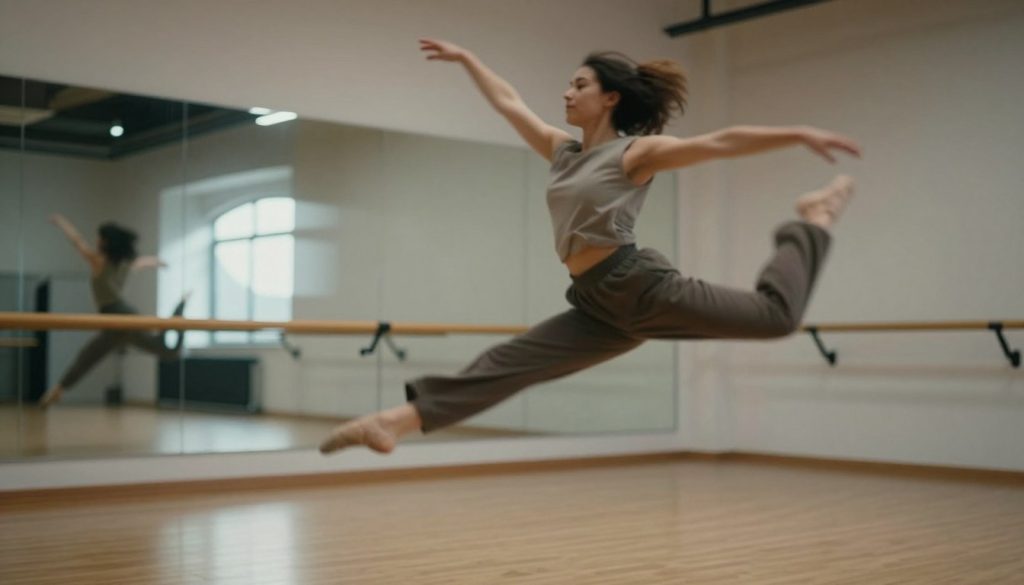
“The secret to a cinematic look is not just high resolution, but the way light and motion interact to mimic the human eye.”
Balancing Shutter Speed and Frame Rate
To get natural-looking results, you need to balance your frame rate and shutter speed. A good rule is to use a 180-degree shutter angle. This means your shutter speed is double your frame rate.
For example, if you’re rendering at 24 frames per second, your shutter speed should be 1/48th of a second. If your shutter speed is too high, your fluid movement will look choppy. If it’s too low, you’ll get too much ghosting, hiding details.
Applying Per-Object Motion Blur vs Camera Blur
It’s important to know the difference between camera blur and per-object blur. Camera blur works for pans or tracking shots, giving a realistic feel. It makes the whole scene look real.
Per-object motion blur focuses on individual elements moving. This is key when something moves fast against a still background. It keeps important details sharp while letting fast-moving parts have a natural blur.
Selecting the Right AI Models for High-Fidelity Output
Your choice of AI model is crucial for your creative workflow. For an ai porn video photoreal, the model’s architecture sets the visual quality. Choosing the right model is key to achieving top-notch results.
Evaluating Stable Diffusion Checkpoints for Realism
Not all checkpoints are the same when it comes to human features and skin. Look for models fine-tuned on high-resolution photos, not just art. Consistency is important, so choose checkpoints that keep lighting and shapes steady.
Creators often favor SDXL or community-made checkpoints for photorealistic skin shaders. These models handle light better than standard ones. Trying different checkpoints helps you find the right mix of art and realism.
Utilizing LoRA Models for Skin Detail Enhancement
Even top models struggle with skin details. LoRA (Low-Rank Adaptation) models are key for adding realistic skin details. They bring in pores, blemishes, and skin texture that makes your work feel real.
Apply these models carefully to avoid over-enhancing the image. A light touch is best to avoid a fake look. This ensures your ai porn video photoreal is detailed and lifelike.
| Model Type | Primary Function | Best Use Case |
|---|---|---|
| Base Checkpoint | Structural Foundation | General scene composition |
| Skin Detail LoRA | Micro-Texture Injection | Close-up portrait shots |
| Lighting LoRA | Global Illumination | Cinematic environment setup |
Refining Color Grading and Tone Mapping
Color grading is the last step to make AI-generated images look professional. When you want photoreal ai porn, the first step needs a fine touch. Adjusting tone mapping helps the highlights and shadows blend well, making scenes believable.
Applying Log Profiles for Dynamic Range
Using Log profiles captures more light details. This method keeps both bright and dark areas clear, crucial for quality videos. Flexibility is key, as it lets you control the final look.
At first, Log footage might look flat or dull. But this is normal. It’s a starting point for adding color. You can then use LUTs to bring the colors to life.
Correcting Skin Tones for Natural Color Accuracy
Keeping skin tones consistent is crucial for a photoreal ai porn look. AI models can struggle with color changes. Use color correction tools to keep skin tones natural.
It’s important to balance red, green, and blue channels. Avoid over-saturating skin, as it can look artificial. Instead, make small adjustments to enhance natural looks.
| Method | Primary Benefit | Complexity Level |
|---|---|---|
| Log Profiles | Maximum Dynamic Range | Advanced |
| LUT Application | Fast Cinematic Look | Beginner |
| Secondary Correction | Skin Tone Accuracy | Intermediate |
| Tone Mapping | Contrast Balance | Intermediate |
Advanced Upscaling Techniques for 4K Realism
To get true 4k realism, you need more than just high-resolution files. You must process each frame carefully to make sure every pixel is sharp and cinematic. Without the right upscaling, even the most detailed AI can look soft or pixelated on today’s screens.
Using Topaz Video AI for Temporal Stability
One big challenge in AI video is stopping frames from flickering. Topaz Video AI has special models for temporal stability. They make sure textures don’t move unnaturally.
These tools help keep motion smooth. This is key to avoiding the jarring effects that can ruin upscaling. Smooth frame rendering is what brings professional 4k realism to your work.
“The goal of upscaling is not just to add pixels, but to intelligently reconstruct the detail that the human eye expects to see in a high-fidelity image.”
Managing Noise Reduction Without Losing Texture
Too much noise reduction can make your image look waxy and artificial. You need to find a balance. Remove digital grain but keep skin pores and fine details.
To keep texture, use lower noise reduction and a slight sharpening. This keeps the skin natural while cleaning the background. Here’s how different settings affect your 4k realism:
| Setting | Texture Retention | Noise Removal | Visual Impact |
|---|---|---|---|
| Low Reduction | High | Minimal | Natural/Grainy |
| Medium Reduction | Balanced | Moderate | Clean/Sharp |
| High Reduction | Low | Aggressive | Waxy/Soft |
Adjusting these settings carefully keeps your video sharp and lifelike. Remember, 4k realism is about detail, not just resolution. Always test your settings on a short clip before a full render.
Managing Depth of Field and Lens Characteristics
Digital perfection can seem fake, but you can make it look real with 4k realism. By using real lens effects, you can make AI videos look like they were shot with a pro camera. This adds a natural feel that high-end movies have.
Simulating Bokeh and Aperture Effects
The way light is handled outside the main focus is key. Adjusting your aperture can make your subject pop against a blurry background. This bokeh effect guides the viewer’s eye to your main subject.
Wide apertures create soft blur in the background. This is crucial for 4k realism as it keeps the background from stealing the show. It makes your footage look like it was shot with a top-notch lens.
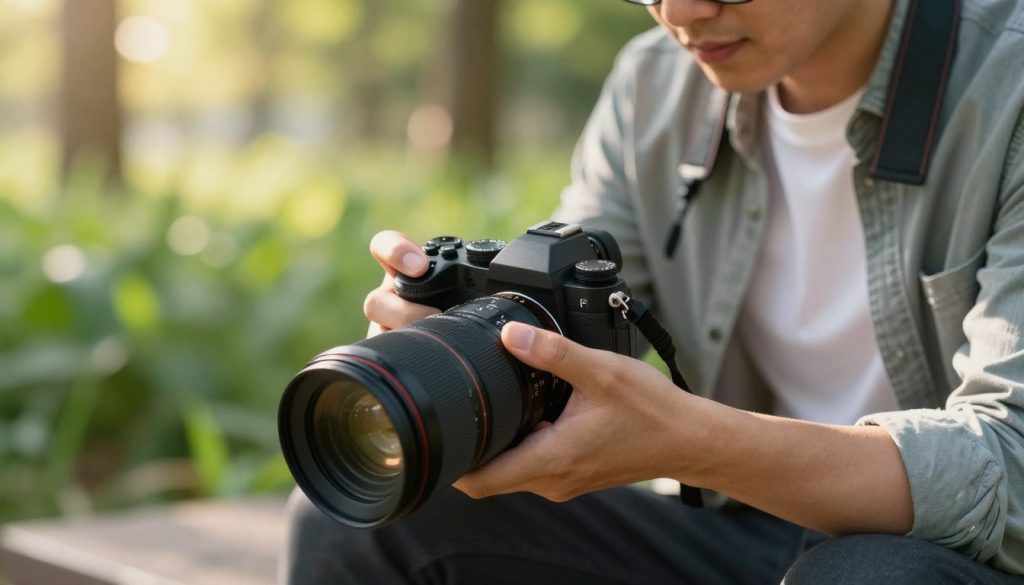
Adding Realistic Lens Distortion and Chromatic Aberration
Perfect lines and sharp colors are signs of digital work. To avoid this, add lens distortions found in real optics. A bit of barrel or pincushion distortion can make your video feel more real.
Chromatic aberration adds to this realism. It’s the color fringing at high-contrast edges. Adding a bit of this optical imperfection makes your video seem like it was captured live. These small flaws are what bring true 4k realism to AI projects.
Troubleshooting Common Artifacts in AI Video
Creating perfect photoreal ai porn needs more than just top-notch settings. It also requires a sharp eye for fixing issues. Even with advanced models, you might still see visual problems that ruin the illusion of reality. Spotting these errors is the first step to making top-quality content.
“Quality is never an accident; it is always the result of high intention, sincere effort, intelligent direction and skillful execution.”
Fixing Flickering and Temporal Instability
Flickering happens when the AI has trouble keeping frames consistent. To fix this, try lowering the denoising strength. This helps the model use more data from the previous frame. Temporal stability gets better with fixed seeds or control-net modules that keep the scene steady.
- Reduce the denoising strength to minimize frame-to-frame variance.
- Utilize temporal consistency tools to anchor your generation.
- Maintain a consistent frame rate to prevent jittery playback.
Eliminating Morphing and Texture Swimming
Texture swimming occurs when the AI tries to re-render static surfaces. This is common in photoreal ai porn, especially with skin or fabric patterns. To solve this, use motion masks to tell the AI which parts of the frame should stay still.
Another good strategy is to use high-quality upscalers. These process the video in chunks, not frame by frame. This keeps the latent space stable, avoiding unnatural morphing that can spoil the quality. Paying close attention to these technical aspects ensures your photoreal ai porn stays engaging and visually appealing.
Workflow Integration for Consistent Results
Creating a reliable pipeline is key to high quality in every project. Treating your creative process as a workflow removes the guesswork that causes inconsistent visuals. Standardizing your methods ensures every frame meets your quality standards.
Establishing a Standardized Rendering Pipeline
A good rendering strategy uses master templates. Save your preferred settings for resolution, frame rate, and noise reduction as presets. This prevents errors and keeps your settings the same for all scenes.
Consistency improves with strict file naming and folder structures. Organizing your assets saves time and lets you focus on the art. This disciplined approach boosts your productivity.
Automating Post-Processing Steps
Boost your productivity by automating post-processing tasks. Modern tools allow batch processing for color grading or upscaling. This keeps your workflow efficient, even with complex projects.
Use scripting or macro tools for routine rendering adjustments. These automated sequences handle color correction or sharpening without manual input. Automation helps maintain quality while cutting production time.
Hardware Requirements for High-End AI Video Generation
To create 4k realism, you need to focus on your GPU and memory. High-end AI video generation uses a lot of resources. Without the right setup, you might face crashes or long waits.
Optimizing VRAM Usage for Large Models
Video memory, or VRAM, is key for complex AI models. Big models need lots of data to look good. You can use model quantization or tiled rendering to manage VRAM better.
These methods help run bigger models on hardware that might struggle. By controlling memory, your system stays stable while making 4k realism videos. Always check your VRAM to avoid errors during rendering.
“The bottleneck in modern AI video production is rarely the software, but rather the physical capacity of the hardware to process high-resolution frames in parallel.”
Balancing Render Times with Quality Settings
Finding the right balance between render times and quality is key. You don’t need top settings for every frame. Adjusting sampling rates and denoising can cut wait times without losing video quality.
Here are some hardware tiers for better 4k realism:
| Hardware Tier | Recommended VRAM | Target Resolution | Render Efficiency |
|---|---|---|---|
| Entry Level | 8GB – 12GB | 1080p | Moderate |
| Professional | 16GB – 24GB | 4K | High |
| Enterprise | 48GB+ | 8K+ | Ultra-Fast |
Test different settings to find the best balance for your project. Consistency in hardware performance helps predict render times. This approach keeps your workflow efficient and pushes visual quality limits.
Conclusion
Mastering high-fidelity ai video is a mix of technical skill and creative thinking. You now know how to work with light, texture, and motion for top-notch results.
Getting photorealism right is an ongoing journey. See your work as a living thing that grows with new tech and tools.
Experimenting is key in this field. Play with settings in Stable Diffusion or Topaz Video AI to see how small changes affect your work.
Stay curious about new trends in digital art. Keeping your skills up to date keeps your work leading-edge. Your focus on detail will make your future projects stand out.
FAQ
How do you establish a high-quality foundation for your photoreal ai porn projects?
Start by picking top-notch base models like Stable Diffusion XL or Juggernaut XL. Make sure your initial resolution fits your desired aspect ratio. Use high sampling steps to give the AI enough data for complex details from the start.
What techniques are essential for achieving realistic skin texture in AI video?
Focus on Subsurface Scattering (SSS) to mimic how light interacts with skin. Use LoRA models for skin detail to get realistic pores and fine hairs. This prevents a “plastic” look.
How can you implement professional lighting setups for cinematic realism?
Use Three-Point Lighting for a professional look. Include Global Illumination and Ambient Occlusion in your prompts. This adds depth and realism to your scenes.
What is the best way to manage motion blur for fluid movement?
Balance shutter speed and frame rate to avoid the “soap opera effect.” Use per-object motion blur for natural-looking fast movements. Keep the animation flow smooth to prevent jarring.
Which AI models provide the best results for skin detail and realism?
Look for Stable Diffusion checkpoints like RealVisXL or EpicRealism for accuracy. Add LoRA weights for skin imperfections and textures. This boosts your photoreal ai porn’s fidelity.
How do you ensure color accuracy and natural skin tones in post-processing?
Render in Log profiles to keep a wide dynamic range. Use DaVinci Resolve for color grading. Adjust tones and skin colors to look warm and lifelike.
What tools are required to achieve 4k realism in your final output?
Use Topaz Video AI to upscale your AI footage. This keeps the animation stable and sharpens details. It enhances resolution without adding digital noise.
How do you simulate realistic lens characteristics like bokeh and distortion?
Adjust virtual aperture settings for Depth of Field. Add Chromatic Aberration and Lens Distortion in post-production. This mimics real camera lens flaws.
How do you fix flickering and texture swimming in AI-generated videos?
Use tools like AnimateDiff or ControlNet for temporal consistency. Lower denoising strength and use Topaz Video AI’s stabilization. This prevents “morphing” and keeps textures steady.
What are the hardware requirements for high-end AI video generation?
You need a strong NVIDIA GPU, like RTX 3090 or RTX 4090. This handles large models’ VRAM demands. It’s key for high-resolution frames and 4k realism without crashes.
How can you automate your workflow for consistent results?
Create a standard rendering pipeline with automated post-processing. Save successful Stable Diffusion settings and lighting templates. This ensures consistent high-fidelity output across scenes.