A finished video clip does not have to cost a credit. The free tier makes stills, the free tools cut them, and the free tier adds the sound — and if you assemble the three in the right order, you can go from a still image to a finished clip in a single day without spending anything. Do the steps in the wrong sequence and you pay for a re-roll you did not need, or you cut a clip you cannot use. Do them in the right sequence and a free clip is still a clip — it plays, it sounds finished, and it cost nothing.
The first article on this site explained what the free tier actually lets you make. The second explained how to cut your first clip from generated footage. The third explained how to add music and voice to free clips. The fourth explained video loops. The fifth explained vertical 9:16 clips for phones. This one assembles the second and third into a pipeline: a single day, a single finished clip, zero credits spent — and the pipeline is the point, not any one step in it.
Quick verdict
Morning: generate the still on the free tier and pick the one frame that moves well. Midday: cut it into a five-second clip with the first-cut method. Afternoon: add music and voice from the free sound options, then export. One day, three steps, zero credits — because the free tier covers the still, the cut, and the sound, and a free clip is still a clip when the order is right.
In this guide
- 1. The pipeline in one picture
- 2. Morning: the still that will move
- 3. Midday: the first cut
- 4. Afternoon: music and voice
- 5. The export that does not break the clip
- 6. What the free pipeline cannot do
- 7. The one-day schedule, hour by hour
- Cost: zero credits, and what zero buys
- 8. Consent: the rule that decides everything
- FAQ
The pipeline vs the pieces, side by side
| Pieces, done separately | Pipeline, done in order | |
|---|---|---|
| Still | Any good image | The one frame that moves well |
| Cut | Cut whenever | Cut after the frame is picked |
| Sound | Added when remembered | Added to the cut, not the still |
| Re-rolls | Every step can force a redo | Each step locks before the next starts |
| Cost | Zero, plus wasted time | Zero, and the day is enough |
The table is the whole argument in one place. The pieces are free on their own; the pipeline is what makes them free together. And a free clip is still a clip — the order is the difference between a day of work and a day of rework.
1. The pipeline in one picture
The pipeline has three steps and one rule: each step locks before the next one starts. Step one, the still: generate the image on the free tier and pick the frame. Step two, the cut: turn the still into a five-second clip. Step three, the sound: add music and voice to the clip. Do not start the cut until the still is chosen, and do not start the sound until the cut is finished — a cut of the wrong still is wasted work, and sound on an unfinished cut has to be redone.
The pipeline fits in a day because each step is short: an hour for the still, an hour for the cut, an hour for the sound. The rest of the day is buffer — the time a step going wrong will take, and the time that keeps a bad morning from becoming a wasted day. A free clip is still a clip, and the pipeline is what protects the day.
Write the pipeline down before you start: still, cut, sound, export. Four words on a sticky note. Every time you are tempted to jump ahead — to add music to a still, to cut a frame you have not picked — the note is the reminder. The pipeline is a sequence, not a menu.
2. Morning: the still that will move
Not every still moves well. The frame that animates best has a clear subject, space around it, and a direction of movement already in the composition: a face turned toward the edge of the frame, a hand mid-gesture, a body leaning into the next moment. A still with the subject dead center and nothing happening will animate into a still that breathes — and a breathing still is not a clip.
Generate three or four stills in the morning and pick one. Do not pick the prettiest; pick the one with the clearest movement in it. The test is simple: look at the still and ask what happens in the next second. If you can answer in one sentence — she turns, she reaches, she steps forward — the still will move. If you cannot answer, the still will freeze, and a frozen clip is five seconds of nothing. A free clip is still a clip, but only if the still has a next second in it.
Keep the still simple: one subject, one background, one light. A busy still gives the motion model too many things to move, and too many things moving is a blur. The morning’s job is not the best image of the day; it is the image that moves best, and those are different images.
3. Midday: the first cut
The first cut is the step most people rush, and rushing it is what wastes the afternoon. Cut the clip to five seconds, and cut it around one action: the turn, the reach, the step. A five-second clip with one action is a clip; a five-second clip with three actions is a montage that nobody asked for.
Watch the cut three times before you move on: once for the movement, once for the edges, once for the ending. The movement should be smooth from the first frame to the last, the edges should not freeze or jump, and the ending should land — the action should finish, not stop mid-gesture. If any of the three fails, fix the cut now, while the sound is still untouched. A free clip is still a clip, and the cut is where the clip is made.

Do not cut for length; cut for the action. If the action takes four seconds, the clip is four seconds. If it takes six, trim the setup, not the action. A clip that ends mid-gesture feels broken; a clip that ends a second early feels intentional.
4. Afternoon: music and voice
Sound goes on the cut, never on the still. Music first, because music sets the pace: pick a track that matches the action’s speed, not the mood you wish the clip had. A slow track on a fast action drags; a fast track on a slow action rushes. Then the voice, if the clip needs one: one line, placed where the action lands, not over the whole clip.
Keep the sound simple. One music track, one voice line, nothing else. Two tracks fighting is noise, and a voice over the whole clip is a narration nobody asked for. The sound should make the clip feel finished: music that starts with the action and ends with it, and a voice that says one thing at the right moment. A free clip is still a clip, and the sound is the finish, not the feature.
Check the sound on a phone, not just on headphones. Most people will watch the clip on a phone, and phone speakers hide bass and exaggerate treble. If the music sounds thin on the phone, it is thin. If the voice is hard to hear on the phone, it is hard to hear.
5. The export that does not break the clip
Export is the step where free pipelines most often break, because the export settings are where the clip’s quality is decided. Export at the same frame rate as the cut, in the same aspect ratio, and do not upscale on export — an upscale at export is a guess, and a guess at the last step is a blur in the final clip.
Export once and watch the export, not the project — the project always looks right; the export is the truth. Watch the whole five seconds on the device the audience will use: the movement is smooth, the sound is in sync, the ending lands. If any of the three fails, go back to the cut — not the still, not the sound. The export is a test of the cut, and the cut is where the fix lives.
Save the export settings that work: frame rate, aspect ratio, and the exact steps you used. A pipeline that works once and is forgotten has to be rebuilt next time; a pipeline that is written down is a pipeline you own.
6. What the free pipeline cannot do
The free pipeline has honest limits. It cannot make a long clip — five seconds is the shape of the free tier, and a story that needs thirty seconds needs a paid clip. It cannot fix a bad still — a still with no movement in it will not move, however good the cut. And it cannot add sound that is not in the free library — a specific song, voice, or effect is a paid choice.
None of those limits is a reason to pay on the first day. A five-second clip that works is a proof of concept, and a proof of concept is worth more than a thirty-second clip that does not. Run the free pipeline until it stops working for what you want — and when it stops, you will know exactly what you are paying for. A free clip is still a clip, and its limits are the price list.
7. The one-day schedule, hour by hour
Here is the day, hour by hour. 09:00: write the brief — one sentence each for the still, the action, the sound. 10:00: generate three or four stills and pick one. 11:00: check the still — does it have a next second? 12:00: lunch, and look at it once more with fresh eyes. 13:00: the first cut, five seconds, one action. 14:00: watch the cut three times and fix it. 15:00: music, then one voice line. 16:00: export, watch on a phone, fix the cut if needed. 17:00: done — a finished clip, zero credits spent.
The schedule has two hours of buffer built in, and the buffer is not slack — it is the time a bad still or a broken cut will take. A day without buffer is a day that ends at midnight; a day with buffer ends at five. A free clip is still a clip, and the schedule is how the day stays a day.
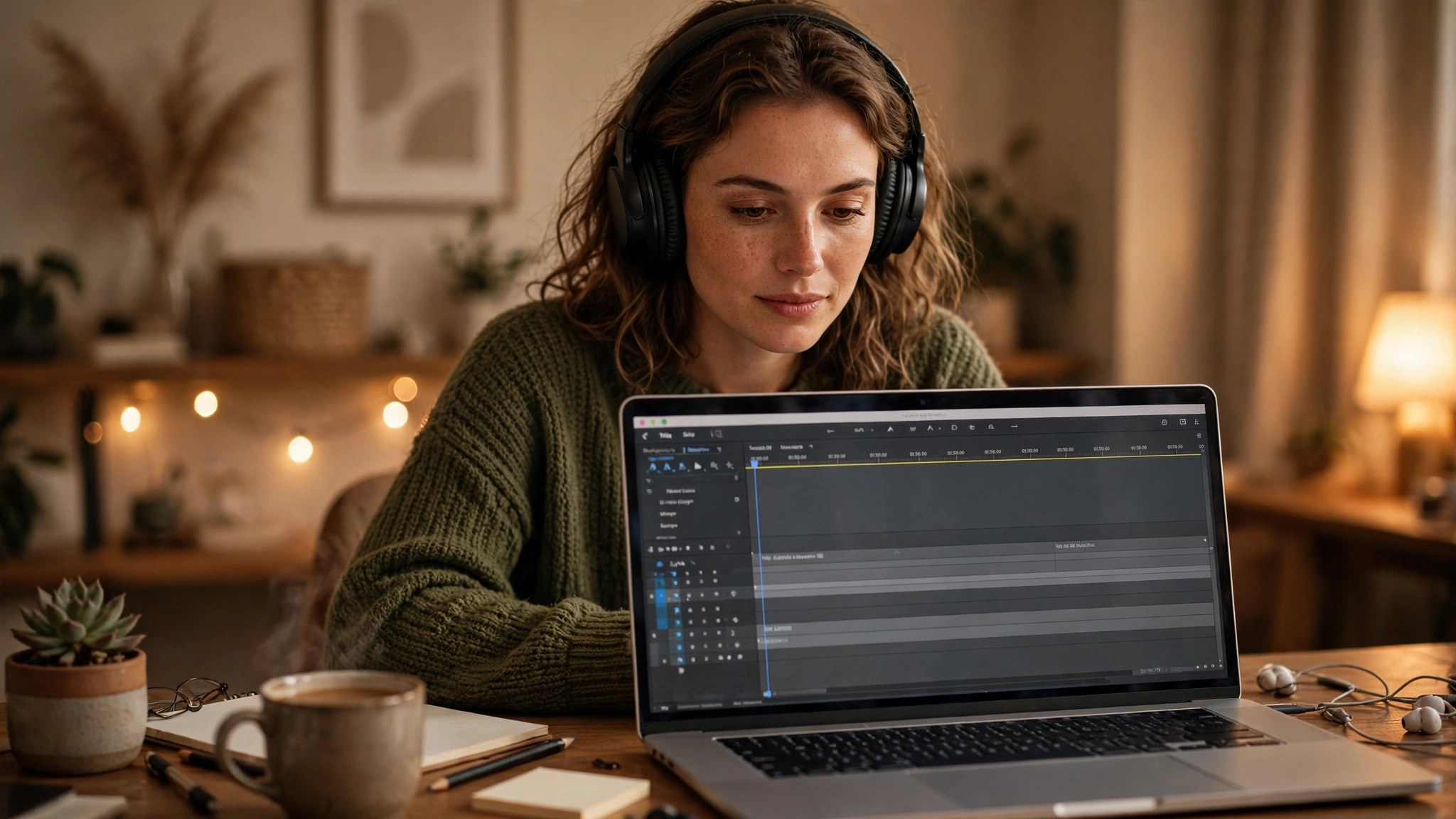
If the day slips, cut the sound, not the cut. A silent clip that moves well is a clip; a clip with sound on a broken cut is a broken clip with music.
Cost: zero credits, and what zero buys
The whole pipeline costs zero credits: the still is on the free tier, the cut is a free tool, and the sound comes from the free library. For comparison, one image is 6 credits — roughly $0.12 on the $19.99 pack and $0.07 on the $59.99 pack. A five-second video template is 351 credits — roughly $7.02 on the $19.99 pack and $4.21 on the $59.99 pack — and an eight-second one is 561 credits — roughly $11.22 on the $19.99 pack and $6.73 on the $59.99 pack. Prices checked 13 Nov 2026; the generator shows the exact cost before you run it, so the price is never a surprise.
The free baseline still stands: 100% free tier, no credit card, and starting a generation needs a Google sign-in. Start free, and the starting is the still.
8. Consent: the rule that decides everything
Only generate images and videos of yourself, or of fictional adults. Never generate an image or a video of a real person without their consent — not a celebrity, not an acquaintance, not a stranger. Non-consensual generation is not allowed, and a generated image is harder to take back than a photo once shared. The tool is built for your own images and fictional adults, and that boundary is absolute.
This matters twice over for video: a moving image of a real person without consent is a deeper violation than a still, because it is harder to disprove and harder to remove. Build the clip from your own footage and fictional adults, and keep real people out of it.
FAQ
Can I really make a finished video clip for zero credits?
Yes, if the clip is five seconds and the still, the cut, and the sound all come from the free tier and the free tools. The pipeline in this guide is one day, three steps, zero credits — and the order is what makes it work.
What makes a still good for animating?
A clear subject, space around it, and a direction of movement already in the composition — a face turning, a hand reaching, a body leaning. If you can say what happens in the next second in one sentence, the still will move.
When should I add the sound?
After the cut is finished, never before. Sound on an unfinished cut has to be redone when the cut changes, and music first for pace, then one voice line where the action lands.
What if the free pipeline cannot do what I want?
Then you know exactly what you are paying for: a longer clip, a specific song or voice, or a still that needs a paid generation. Run the free pipeline until it stops working, and the paid step will be obvious.
How long does the whole pipeline take?
One day, with two hours of buffer: morning for the still, midday for the cut, afternoon for the sound and the export. If the day slips, cut the sound, not the cut.
Can I make AI porn of a real person?
No. Only generate images of yourself, or of fictional adults. Generating an image of a real person without consent is not allowed.
Final verdict
Still, cut, sound, export — in that order, in one day, for zero credits. A free clip is still a clip, and the pipeline is what makes it finished.