Ever thought about turning into your favorite story character? Mastering cosplay shoots is more than just wearing a costume. It’s an art that mixes photography skills with deep passion.
As digital worlds grow, many artists are sharing their fandom outfits on new platforms. This change lets them connect with fans while keeping their work top-notch.
Whether you’re working on detailed licensed looks or making props from scratch, your professionalism counts. This guide will help you improve your craft. You’ll learn to mix camera skills with the character’s spirit.
Key Takeaways
- Understand the importance of selecting the right platform for your creative work.
- Learn how to balance technical photography skills with character portrayal.
- Discover tips for sourcing and styling high-quality fandom outfits.
- Master the process of bringing licensed looks to life with authentic props.
- Elevate your professional presence to stand out in a competitive digital space.
Planning Your Cosplay Concept and Character Selection
Every great cosplay starts with a solid plan. This plan connects your imagination to reality. A clear cosplay concept is your guide, making sure your final look is strong and unified. Choosing your character selection early helps avoid mistakes and makes your creative journey smoother.
Researching Source Material for Accuracy
Good cosplay research is key to a true portrayal. Collect high-quality images, turnarounds, and official art to grasp your character’s details. For example, Stevie Ryu uses yellow glasses and facial piercings to add a unique touch.
When studying your source material, focus on these points:
- Fabric textures and material finishes.
- Signature props and weapon dimensions.
- Color palettes and lighting effects in the original media.
- Unique character mannerisms that define their presence.
Selecting the Right Character for Your Skill Level
Picking a character that fits your skill level is crucial. It’s better to start with something you can handle to avoid getting stuck. Mastering the basics first boosts your confidence before moving to more complex designs.
Think about these when choosing a character:
- The complexity of the sewing patterns required.
- Your current access to specialized tools like 3D printers or foam cutters.
- The time commitment needed for painting and weathering.
Budgeting for Outfits and Custom Props
Planning your budget is as important as your creative work. Unexpected costs can throw off your plans. So, make a detailed budget to stay on track. Include costs for materials, shipping, and possible replacements for mistakes.
To manage your budget, focus on the most visible parts of your costume. Investing in quality materials for key pieces is often better than spreading your budget too thin. Always save a little extra for last-minute needs that often pop up during the final stages.
Sourcing and Crafting High-Quality Fandom Outfits
Making a character look right is more than just buying a costume. It’s about finding the right mix of ready-made items and custom fabrication. This mix can turn a simple costume into a top-notch cosplay.
Evaluating Ready-to-Wear Licensed Costumes
Many cosplayers start with licensed gear as a base. But, always check the fabric and stitching quality first. Authenticity is in the details, so look for items that can be easily customized.
If a costume seems too basic, see it as a chance to add your own touch. Swap cheap buttons for metal ones or add wear and tear. These tweaks can make a big difference, turning a generic costume into a standout fandom outfit.
Custom Fabrication Techniques for Authentic Looks
To really stand out, add unique touches through custom fabrication. Use costume prompts to think of creative ways to make your costume different yet still recognizable. This lets you play with different textures, shapes, and materials.
Don’t be shy about mixing materials, like foam and fancy fabrics. Making your own patterns or tweaking existing ones ensures a perfect fit. This attention to detail is what catches the eye of judges and photographers.
Sourcing Fabrics and Materials in the United States
Finding the right materials is key. Using high-quality fabrics from the United States means your costume will last under studio lights. Local suppliers offer specialized textiles that hold up to travel and long convention days.
When planning your build, use the following table to compare your sourcing options:
| Sourcing Method | Cost Level | Customization Potential | Time Investment |
|---|---|---|---|
| Licensed Ready-to-Wear | Low to Medium | Limited | Minimal |
| Modified Base Items | Medium | Moderate | Moderate |
| Full Custom Build | High | Unlimited | Extensive |
Using costume prompts can help you design more efficiently. The best fandom outfits blend your personal style with the character’s essence. Spending time on the right materials will make your cosplay shine in photos.
Mastering Prop Construction and Detailing
Learning prop construction is key for serious cosplayers. Props make a costume look like a real character. They must look good and work well.
Choosing Materials for Lightweight and Durable Props
Use light materials for cosplay props so they’re easy to carry. EVA foam and Worbla are top choices. They help you make detailed props without them being heavy.
| Material Type | Best Use Case | Durability | Weight |
|---|---|---|---|
| EVA Foam | Armor and Shields | High | Very Light |
| Thermoplastics | Intricate Details | Very High | Light |
| 3D Printed PLA | Complex Gadgets | Medium | Moderate |
Painting and Weathering Techniques for Realism
Advanced painting and weathering add realism to your props. Start with a good primer. Then, use dry brushing and acrylic washes for scratches and dirt.
These details make your props look real. Keep your colors consistent to stay true to your character. Always finish with varnish to protect the paint.
Safety Considerations When Handling Prop Weapons
Always think about prop safety with weapons. Check venue rules before you go. Make sure your props look like they’re not real.
Be careful with outdoor shoots. Know the laws about fake weapons. Carry your props safely to avoid trouble.
Leveraging AI Porn Video Cosplay and Digital Tools for Planning
Artificial intelligence lets you explore new creative heights. By using digital tools, you can make planning easier. This way, you can avoid mistakes that cost a lot before you start.
Using AI Tools to Visualize Costume Variations
Advanced software can show you what your costume might look like. You can try out different colors, textures, and shapes. Seeing your costume in a virtual space helps make sure it matches your vision.
Generating Costume Prompts for Design Inspiration
Stuck on a design? Costume prompts can spark your creativity. By giving details about your character, you can find new ideas. This helps you create something truly unique.
Ethical Considerations and Digital Privacy in AI Cosplay Content
When using AI, always act with ethics. Be careful with how you use platforms for ai porn video cosplay. Keeping your digital life private is key when sharing images or creating new content.
Here are some tips for staying safe online:
- Always check the terms of service for any platform using your data.
- Don’t share personal info when making a cosplay ai porn video or digital assets.
- Respect the rights of original creators when using AI to change character designs.
Scouting Locations and Setting the Scene
The place you pick is key to your character’s story. In cosplay photography, the setting tells a story without words. It makes your costume feel real.
Choosing a spot that looks like your fandom makes your photo feel like a journey. It turns a simple picture into an adventure.
Finding Public Spaces That Match Your Fandom Aesthetic
Good location scouting means looking beyond usual places. You might find special spots, like Rhode Island’s desert, that look like a post-apocalyptic world. These places add a real feel that usual spots can’t match.
Think about how the light and textures of a place work with your props. Visual harmony between your outfit and the setting is crucial. If the place feels right, your character will look more natural.
Securing Permits for Professional Shoots
Before you start, check if you need photoshoot permits. Places like historical sites or state parks might need permission for big equipment. Not getting a permit can mess up your shoot.
“The camera is an instrument that teaches people how to see without a camera.”
Getting permits is part of location scouting for pros. It keeps your shoot smooth and follows the law. Always contact site managers early to book your spot.
Utilizing Studio Spaces for Controlled Lighting
For a certain mood, indoor shoots might be best. Studios let you control the lighting, perfect for cosplay photography that needs precision.
In a studio, you’re not affected by weather or changing light. You can create the perfect mood with artificial lights. While finding outdoor spots is fun, studios are reliable for serious creators.
Essential Photography Gear for Cosplay Shoots
Capturing the details of your cosplay needs more than a basic camera setup. You need reliable photography gear to show off your costume’s craftsmanship. The right equipment makes sure every detail is sharp and colorful in your photos.
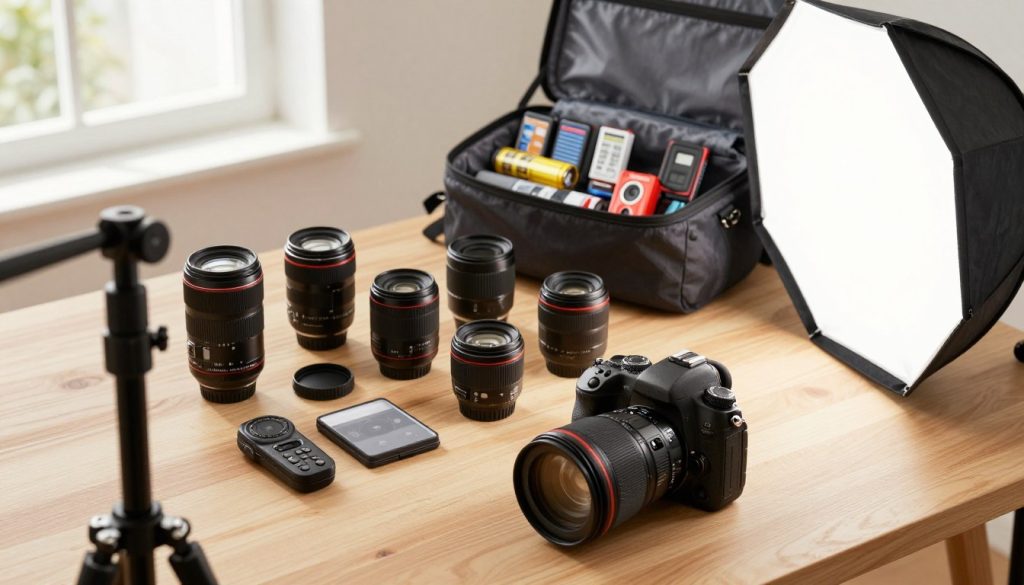
Selecting the Right Camera Bodies and Lenses
Choose a camera body with high dynamic range and great low-light performance. Full-frame sensors are best for capturing depth and detail. Pair these with top-notch camera lenses for professional results.
Prime lenses, like 50mm or 85mm, are great for portraits. They create a shallow depth of field, making your character pop. Always choose glass that focuses sharply to highlight your costume’s textures.
Portable Lighting Solutions for On-Location Shoots
Natural light can be unpredictable, especially outdoors. Using cosplay lighting solutions lets you control your scene. Portable LED panels are light and adjust to match your character’s mood.
Speedlights are also key for outdoor shoots. They provide quick, bright light to freeze motion or fill shadows. Mastering these tools makes your character look polished in every photo.
Managing Reflectors and Diffusers for Better Portraits
Reflectors and diffusers are crucial for lighting control. A diffuser softens harsh sunlight, avoiding blown-out highlights. A reflector bounces light to eliminate shadows.
Knowing how to use these tools can take your photos to the next level. Even small adjustments can change a portrait’s mood. Here’s a table showing common gear and their uses.
| Equipment Type | Primary Function | Best Use Case |
|---|---|---|
| Prime Lens | Sharpness & Bokeh | Character Portraits |
| LED Panel | Constant Lighting | Indoor or Low-Light |
| 5-in-1 Reflector | Light Modification | Outdoor Sunlight |
| Speedlight | High-Speed Flash | Dynamic Action Shots |
Directing Poses and Capturing Character Essence
Your ability to embody a character through specific mannerisms is key to a professional cosplay shoot. A high-quality costume is just the start. Character essence brings your portrayal to life. By focusing on how your character moves and interacts, you create a more authentic experience for your audience.
Studying Character Mannerisms and Signature Poses
Before the shoot, analyze your character’s source material. Look for habits like how they hold their hands or tilt their head. These small details make your cosplay posing feel genuine and grounded.
Practice these movements in front of a mirror to build muscle memory. Consistency is vital, as it ensures your body language remains true to the character. When you feel comfortable in these poses, your confidence will shine through in every frame.
Communicating Effectively with Your Photographer
A successful shoot depends on a strong partnership between you and your photographer. Explain your vision for the cosplay posing to ensure they capture your costume’s best features. Open dialogue allows you to adjust your expressions in real-time, ensuring the final images match your creative goals.
Don’t be afraid to ask for feedback during the process. Your photographer can often see things from their perspective that you might miss while in character. Clear communication helps bridge the gap between your performance and the technical requirements of the camera.
Using Props to Enhance Dynamic Movement
Integrating your gear into your performance adds energy to your photos. Using props to create dynamic movement can turn a static image into a compelling narrative moment. Whether it is a flowing cape or a signature weapon, these items help tell a story.
Focus on how the prop interacts with your body to create natural lines and shapes. Movement adds a sense of urgency and life to your photos, preventing them from looking stiff or posed. By mastering this technique, you ensure that your final gallery captures the true spirit of your character.
Post-Processing and Editing Your Cosplay Images
Professional cosplay photography needs a detailed digital editing approach. After the shoot, your raw files are the base for a polished final product. This stage lets you fix lighting issues and boost the mood of your images.
Color Grading to Match the Source Material
Color grading is key to matching your photos with the original’s look. Adjusting hue, saturation, and luminance helps match the color palette of your favorite anime, game, or film. This makes your images feel like a natural part of the character’s world.
Think about the lighting in the original media when making these changes. If it’s dark and moody, your edits should be too. Consistency in color ensures your images feel like a true part of the character’s world.
Removing Distractions and Cleaning Up Costume Details
Good cosplay editing is more than color adjustments. It’s about paying close attention to detail. Remove background elements like trash or modern signs to focus on your costume and performance.
Also, fix minor imperfections in your gear. Use healing brushes to repair fabric tears or prop paint chips. These small touches make your work look professional.
Maintaining Character Integrity During Retouching
While digital tools are powerful, keep the character’s essence intact. Avoid over-processing skin or changing facial features too much. Your goal is to enhance the authenticity of the portrayal, not create a fake look.
Always stick to the original character design when making big changes. If unsure, compare your work to official reference art. This keeps your images true to the source while showing your unique vision.
| Editing Task | Primary Tool | Goal |
|---|---|---|
| Color Grading | Curves/LUTs | Match source mood |
| Object Removal | Content-Aware Fill | Clean background |
| Skin Retouching | Frequency Separation | Natural texture |
| Detail Cleanup | Clone Stamp | Fix costume flaws |
Navigating Copyright and Licensing for Commercial Shoots
Understanding intellectual property is key for cosplayers. Moving from hobby to pro means knowing legal limits. Knowledge is your best defense in the creative world.
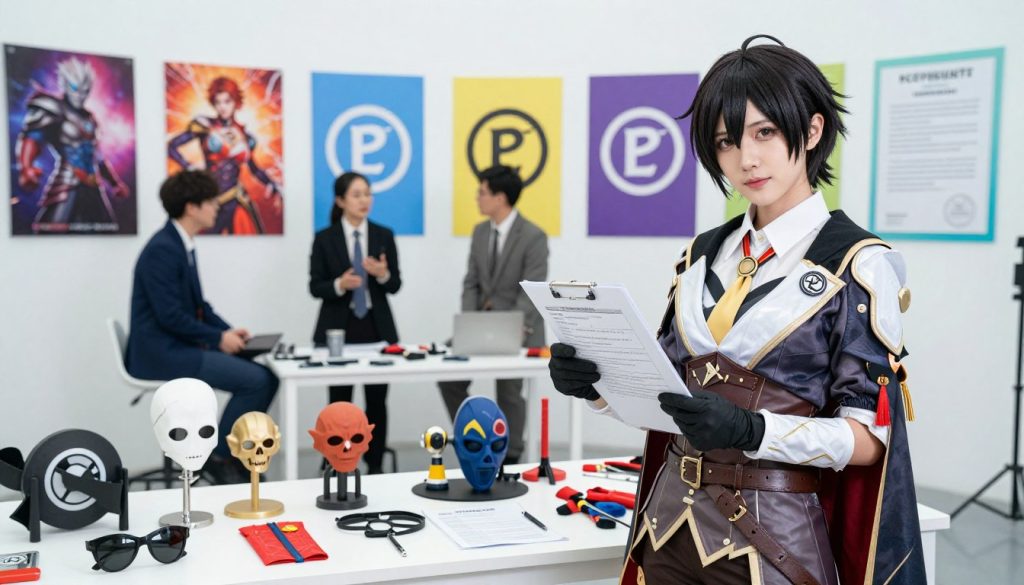
Understanding Fair Use in Fan-Created Content
Fair use lets you use copyrighted material without permission. In cosplay, your work can be seen as transformative. But, it’s not a complete shield from copyright claims.
Try to make original interpretations, not direct copies. Highly transformative work might be fair use. But remember, making money changes the rules.
Best Practices for Sharing Licensed Looks Online
Sharing on social media needs a digital ethics approach. Always credit the original creators. This shows respect and keeps good relations with the industry.
- Always provide clear attribution to the original IP owner in your captions.
- Avoid using official logos or trademarks in a way that implies an official endorsement.
- Be cautious with emerging technologies; for example, avoid unauthorized ai porn video cosplay content that uses protected likenesses.
- Monitor your platforms for any takedown notices and respond to them promptly and professionally.
When to Seek Permission for Professional Projects
For big commercial projects, like ads or partnerships, you need licensing. Relying on fair use for money is risky. Formal permission lets you grow your brand safely.
Talking to an intellectual property attorney is smart. They help with studio rules and contracts. This way, your career stays successful and legal.
Conclusion
Your cosplay journey is always growing. It’s a mix of art and self-expression. Every costume and character you create adds to your unique portfolio.
Being part of the fandom community lets you share your love for cosplay. You also learn from others. This teamwork brings new ideas and pushes costume design forward.
To become a pro cosplayer, you need skill and storytelling. This guide helps you make top-notch images of your favorite characters.
Keep working hard and trying new things. Your focus on detail makes your cosplay stand out. Keep bringing your favorite characters to life with pride.
FAQ
How do I ensure my character selection is realistic for my current skill set?
Start by looking at the design’s complexity. Check if it needs a lot of custom work. Break it down into parts like sewing and prop making. If it’s too hard, pick something simpler to avoid burnout.
What are the best methods for finding authentic fabrics in the United States?
Look for fabrics at places like Mood Fabrics or JOANN. Choose materials that match the character’s look, like wool or synthetic leather. Always get swatches first to make sure they’re right.
How can I use AI tools safely without compromising my digital privacy?
Use AI on trusted sites like Midjourney or Adobe Firefly. Be careful of sites with bad content. Always check how your images are used by the AI.
Do I need a permit to shoot my cosplay in a public park?
It depends on your gear and location. Cities like LA or NYC might need a permit for big shoots. Check the park’s website to avoid trouble.
What is the most important piece of gear for a beginner cosplay photographer?
A good camera is key, but a fast prime lens is more important. A 35mm or 50mm f/1.8 lens helps focus on details and hides bad backgrounds.
How do I handle copyright issues when selling my cosplay prints?
Understand fair use and the rights holders’ policies. Some companies, like Riot Games, have clear rules. Always check with a legal expert or the brand’s manager before selling.
What are some effective ways to make props look battle-worn and authentic?
Use advanced painting and weathering techniques. Start with a base coat, then add grime with a sponge. Silver leafing pens can make foam props look like metal.