Ever wondered how digital creators make their projects look so real? The key is mastering the right tools. An ai porn cast builder lets you fine-tune every aspect of your character easily.
Discover how to handle the complex world of ai porn casting. This ensures your vision is brought to life with precision. It also meets the technical and artistic needs of today’s character creation.
By following these steps, you can create top-notch digital characters. You’ll have full control over your art and make your production process smoother.
Key Takeaways
- Understand the core functions of character generation tools.
- Learn to select body types and styles for maximum realism.
- Master acting cues to enhance digital performance.
- Navigate technical requirements for better output quality.
- Streamline your creative workflow using professional techniques.
Understanding the AI Porn Cast Builder Interface
Starting your digital design journey means getting to know the workspace. Learning the interface is key to becoming a skilled character creator. Organizing your workspace well makes your ai porn cast builder experience both productive and easy to use.
Navigating the Dashboard Layout
The dashboard is your control center for creative projects. Most tools have a modular layout, letting you pin panels to the side. This setup boosts your workflow efficiency by cutting down on menu searching time.
“Organization is the silent partner of creativity; without it, even the most brilliant vision can become lost in the clutter of a complex interface.”
Accessing Core Character Creation Tools
Once you’re familiar with the layout, dive into the main tools. These tools let you work on geometry, textures, and lighting with precision. A tidy character creator interface keeps these tools handy, avoiding design process hiccups.
Choosing the right workspace setup is important. Here’s a look at common interface types:
| Interface Mode | Primary Focus | Best For |
|---|---|---|
| Minimalist | Viewport space | Quick sketching |
| Advanced | Technical controls | Detailed modeling |
| Asset-Heavy | Library management | Complex projects |
Managing Your Saved Projects and Assets
Managing your character assets well is crucial for success. Use a consistent naming system for your files as your library grows. Back up your projects regularly to keep your work safe, even when trying new ai porn cast builder methods.
Keeping your assets organized boosts your workflow efficiency at every stage. This organized approach lets you focus on the creative aspects of your work. A clean digital space is essential for every successful project.
Defining Your Character Archetype and Vision
Creating a compelling digital persona starts long before you use software. A strong vision is your guide, making sure every choice has a purpose. By focusing on your subject’s core identity, you turn digital character design into a believable, immersive experience.
Establishing the Narrative Context
Every character needs a backstory to feel real. Define the setting, the character’s motivations, and their current situation. This foundation makes your work feel full and connected.
Knowing the character’s story helps you make better choices. A character for a fast-paced, modern setting needs a different look than one for a classic story.
Selecting Personality Traits for AI Modeling
After setting the story, you need to turn those qualities into specific parameters for AI modeling. Think about how your character interacts with the world. Are they bold, shy, or enigmatic?
These traits guide the software to create results that match your vision. This control is key for consistent, high-quality output.
Aligning Visuals with Character Backstory
Good ai porn casting combines appearance and personality seamlessly. If your character is a rugged adventurer, their look should show that. When visuals match the backstory, the result feels intentional and professional.
Here’s a table to help you see how different archetypes affect your design choices:
| Archetype | Personality Focus | Visual Style | AI Modeling Priority |
|---|---|---|---|
| The Professional | Disciplined, Sharp | Tailored, Clean | Symmetry and Precision |
| The Rebel | Bold, Unpredictable | Edgy, Textured | Dynamic Lighting |
| The Romantic | Soft, Expressive | Elegant, Flowing | Facial Micro-expressions |
| The Athlete | Energetic, Strong | Functional, Athletic | Muscle Definition |
Keeping a cohesive strategy ensures your ai porn casting is successful. Remember, the best digital character design projects blend story and visuals perfectly.
Selecting Physical Attributes and Body Types
Creating a believable character begins with the physical foundation. It’s crucial to focus on anatomical accuracy when adjusting body parts and facial features. This ensures your character looks natural and real.
Adjusting Proportions and Measurements
Start by setting the base frame of your character. Use sliders to change height, limb length, and torso width. Keeping these measurements consistent helps your character look realistic.
Choosing Skin Tones and Complexion Details
Picking the right skin tone adds depth to your character. Adjust color gradients and add freckles or blemishes for a more realistic look. These details prevent your character from appearing flat.

Customizing Hair Styles and Facial Features
Facial structure reveals your character’s personality. Try different jawlines, nose shapes, and brow arches for a unique look. Then, pick a hairstyle that fits your design’s aesthetic.
Fine-tuning Eye Color and Shape
The eyes are key to expressing emotions. Adjust iris color and eyelid shape to show specific traits. Getting this right is crucial for a lifelike gaze.
Applying Realistic Skin Textures
To improve your AI modeling, use high-resolution skin textures. These textures add detail and make your character seem real. Save these settings as character presets for future use.
Refining Aesthetic Style and Visual Presentation
You can turn a simple model into a stunning work of art by improving your aesthetic style. The mood of your project depends on balancing artistic choices with technical settings. This ensures your character feels real and believable in the digital world.
Applying Artistic Filters and Rendering Styles
The choice of rendering styles greatly changes your character’s look. You might want a realistic look for dramatic scenes or a stylized look for artistic ones. Trying out different filters helps you control the texture and depth of your character’s skin and clothes.
Consistency is key when using these effects. Always check how your style works with the model’s geometry. Making the right adjustments helps avoid unwanted issues and gives a smooth finish.
Choosing Wardrobe and Accessory Options
Picking the right clothes is crucial for your scene dynamics. Your character’s clothes should show their personality and fit the setting. Think about how fabric textures move and how accessories might change in active poses.
- Choose materials that match the setting.
- Make sure accessories don’t clip through the model.
- Use layers to add depth to the outfit.
Setting the Color Palette for Your Scene
A consistent color palette brings your project together. Choose colors that match the mood of your story and the lighting integration. When your character’s colors match the background, it feels more natural and immersive.
Good lighting integration means matching your character’s highlights and shadows to the scene’s light. This makes your character blend seamlessly with the background. Use the table below to guide your aesthetic choices for different projects.
| Style Type | Primary Focus | Lighting Integration |
|---|---|---|
| Cinematic | High Contrast | Deep Shadows |
| Soft Portrait | Natural Tones | Diffused Glow |
| Cyberpunk | Neon Accents | Dynamic Reflections |
| Minimalist | Neutral Palette | Flat, Clean Light |
Mastering Acting Cues for Realistic Performance
To make a virtual actor seem alive, you need to control every movement precisely. Treat your digital character like a real actor, using small cues to show depth and purpose. This way, your character will connect with the audience.
Implementing Facial Expressions and Micro-expressions
Micro-expressions are quick changes in facial muscles that show true feelings. To look real, layer these small changes over bigger expressions. Consistency is key in making your digital character seem human.
The secret to a great performance lies in the small, often overlooked details that bridge the gap between artificial and authentic.
Directing Body Language and Posture
Good blocking is essential for believable scenes. Think about how your character moves and takes up space. Proper posture shows confidence, while slight changes in weight can show doubt or fear.
- Use open stances to project authority.
- Apply slumped shoulders to indicate fatigue or sadness.
- Incorporate natural fidgeting to add a layer of human imperfection.
Synchronizing Movement with Scene Dynamics
Your character must react smoothly to the environment to keep the story real. When you match your character’s actions with the scene dynamics, the whole story feels connected. Always make sure movement speed matches the story’s intensity.
Defining Interaction Cues for Multiple Characters
When working with many characters, timing is everything. You need to set clear cues so that one character’s action leads to a logical response from another. This creates a rhythmic flow that keeps the viewer interested.
Adjusting Gaze and Eye Contact Settings
Eye contact is key for connecting your character with the viewer. Calibrate gaze settings so your character looks natural. Strategic eye contact can show who’s in charge in a scene, making your virtual actor seem more real and aware.
Advanced Customization Techniques for Character Creators
Mastering complex design workflows lets you achieve unmatched detail in your projects. Going beyond basic settings unlocks your character creator‘s full potential. These advanced methods make your work stand out in a crowded digital world.
Utilizing Layering for Complex Character Designs
Layering adds depth to your digital character design. It stacks different visual elements for intricate details. Layering gives precise control over skin, makeup, and clothing.
Try adjusting opacity to blend layers smoothly. This makes your characters look more realistic and professional. It’s the key to creating unique models that seem alive.
Importing Custom Assets and Textures
The platform lets you import external files to expand your toolkit. Adding custom assets brings your vision to life in the character creator. You can upload unique textures, clothes, or accessories to make your work personal.
Make sure your files are optimized for the engine to keep performance high. High-quality textures make your digital character design more realistic. This flexibility is crucial for artists who want to avoid generic results.
Saving and Loading Character Presets
Time is precious, and managing projects well is key to success. Saving your work as character presets lets you quickly recall your favorites. This is essential for workflow efficiency when working on multiple projects.
Organize these files in folders by style or project type. Loading character presets saves you from repeating setup steps. Using these saved files improves your workflow efficiency significantly.
Balancing Lighting and Environment with Character Design
Lighting is key to making a virtual actor look real. It brings your digital character design to life. To get this right, you need to understand how light works in 3D spaces.
Matching Character Skin to Ambient Lighting
Start by matching your character’s skin to the scene’s light. If it’s a warm sunset, your character should have golden skin. This makes them blend in, not look like a sticker.
“Light is the most powerful tool in the artist’s kit, capable of defining mood, depth, and reality in a single stroke.”
Adjusting Shadows and Highlights for Depth
To add depth, play with shadows and highlights. Dramatic scenes need high-contrast lighting, while soft light is better for a natural look. Strong shadows make your character feel real.
Make sure your character’s light matches the scene’s. If the background is lit from the left, your character should be too. This keeps the scene looking cohesive.
Integrating Characters into Pre-built Backgrounds
When adding your character to a background, think about the scene’s feel. Use color grading to match the character and background. This makes them look like they belong together.
Focus on where the character meets the background. A rim light or blur can help them blend in. These details make your work look professional.
Iterative Testing and Prompt Engineering
Getting better at making things is all about trying again and again. When you use AI modeling, the first try is not usually what you want. By following a set plan, you can turn simple ideas into detailed and precise images.
Writing Effective Prompts for Character Consistency
To keep characters looking the same, be clear in your descriptions. Use specific tags for things like hair color, eye shape, and clothes. Keeping these details the same in every prompt helps the AI remember what you want.
Don’t change too many things at once when trying new ideas. If you change the setting or lighting, keep the character description the same. This careful approach is key to good prompt engineering.
Using Negative Prompts to Refine Results
Negative prompts help clean up your images. They tell the system what not to include, like wrong body parts or messy backgrounds. By listing common mistakes, you push the model to do better.
Try different weights for your negative terms to find the right mix. Sometimes, a simple word is enough, but other times, you need to stress certain exclusions for clear results. This control is crucial for top-notch AI modeling.
Analyzing Generation Feedback for Improvements
Every try gives you useful feedback to improve next time. Check the output to see where the model has trouble keeping character consistency. If the face changes, adjust your prompt or add a reference image.
Keep learning and improving with prompt engineering. Use the table below to see how changes affect your results.
| Strategy | Primary Benefit | Expected Outcome |
|---|---|---|
| Descriptive Tags | Identity Stability | Consistent facial features |
| Negative Prompts | Artifact Removal | Cleaner, sharper images |
| Iterative Testing | Workflow Precision | Reduced generation errors |
Troubleshooting Common Generation Errors
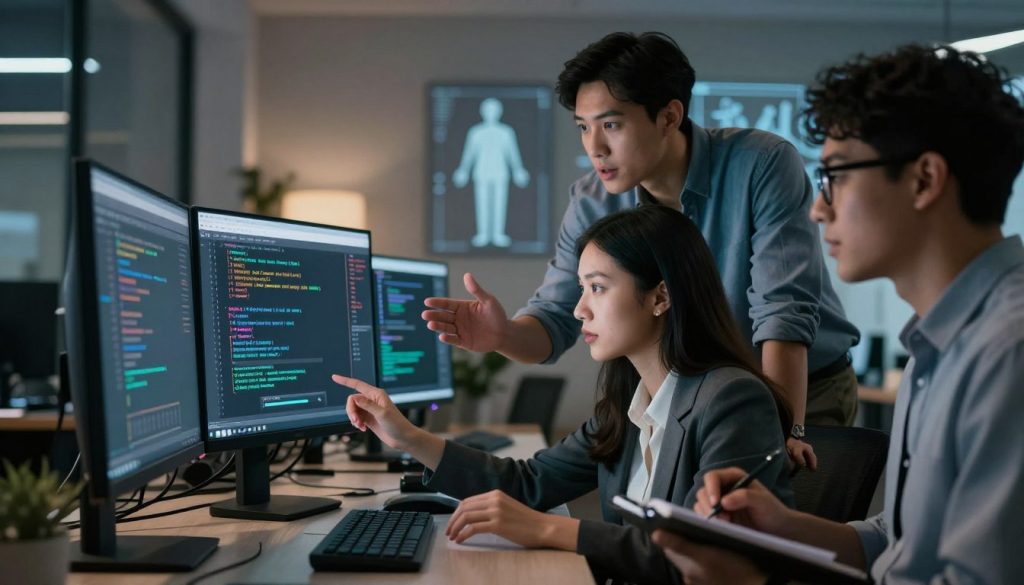
Even the most advanced AI tools can sometimes surprise you with unexpected results. When creating a virtual actor, small problems can slow down your creative work. Knowing how to quickly fix these issues helps keep your project moving forward.
Fixing Anatomical Distortions
Keeping your character’s body right can be tough. If your character looks wrong, like it has extra parts or wrong features, check your prompt engineering. Use specific negative prompts to avoid these mistakes.
Also, saved character presets can help. They keep your model looking good. If problems still happen, tweak your keywords to focus on the body’s shape.
Correcting Lighting Mismatches
Characters sometimes don’t fit well with their backgrounds. To fix this, match the light in your scene with your character’s. If your character looks flat, adjust the shadows and highlights.
- Check the light source direction in your background image.
- Modify the global illumination settings to match the scene’s mood.
- Use post-processing filters to unify the color palette of the character and the environment.
Resolving Texture Clipping Issues
Texture clipping is when clothes or accessories look like they’re on the skin. This usually happens with complex movements or custom assets. To fix it, scale the clothes or adjust the collision settings.
If it still happens, try using different layers for clothes and body. Fine-tuning these settings will make your final image look better. Always check your work after making these changes to make sure the problem is fixed.
Best Practices for Consistent Character Output
Creating consistent characters is key for top-notch digital projects. In ai porn casting, keeping features the same in different scenes is crucial. This keeps your audience focused on the story, not distracted by visuals.
Maintaining Continuity Across Multiple Scenes
To keep characters consistent, use prompt engineering carefully. Always note the seeds and model weights for the first character. Using these for later scenes helps keep everything consistent.
Stable descriptive tags are also vital. Changing your prompts too much can confuse the AI. Keep the main physical details the same in every prompt to keep the character’s look consistent.
Organizing Your Asset Library for Efficiency
Good management of character assets saves time. Set up folders for character presets, clothes, and lighting. This makes finding what you need quick and easy.
Use a simple naming system for files, like “CharacterName_Outfit_LightingType.” This keeps things organized as your library grows. Efficiency in managing files helps you keep up a high output without losing quality.
Scaling Your Workflow for Complex Projects
For bigger projects, focus on anatomical accuracy and design in parts. Instead of making whole scenes, create characters in sections. This lets you update details without redoing the whole image.
Boost your workflow efficiency by automating tasks with batch tools. Test your prompts on a small scale first. This helps catch errors before big renders. It keeps your work professional and consistent.
Conclusion
You now know how to use the ai porn cast builder with skill. You can make unique visions come to life on screen. This is thanks to your ability to handle complex tools.
Every project is a chance to get better at your craft. The best way to improve is through practice. Make sure your digital actors stay true to themselves in every scene.
Choosing the right character creator software is key to your storytelling. You can tweak everything from skin texture to facial expressions. These small changes make your work stand out.
Try new prompts and lighting setups to grow as a designer. Testing different settings is crucial for your growth. Share your best work to see how others use these tools.
Keep up with the latest in generative technology to stay ahead. Your digital design journey is just starting. Use these skills to build a portfolio that shows off your talent and technical skills.
FAQ
How do I begin using the character creator dashboard to manage my projects?
To start, navigate the dashboard to find the Core Character Creation Tools. You can then access your saved projects and assets. This makes your workflow smooth when creating your initial cast profiles in platforms like Stable Diffusion or Civitai.
How can I ensure my character’s visuals align with their narrative backstory?
Start by setting a clear narrative context before picking personality traits for your AI modeling. Aligning visual cues like wardrobe and facial features with the character’s history makes them more believable and immersive.
Can I customize specific body measurements and skin textures for high-end results?
Yes, you can adjust body measurements precisely. Choose specific skin tones and complexion details for realistic figures. This creates unique, anatomically accurate characters that stand out.
What is the best way to direct a virtual actor for a natural performance?
Directing a virtual actor means understanding blocking and scene dynamics. Use micro-expressions and adjust gaze settings for natural interaction. Balance subtlety and extravagance for a believable performance.
How do I integrate my character into pre-built backgrounds without it looking fake?
Focus on balancing lighting and environment. Match your character’s skin tones to the ambient lighting. Adjust shadows and highlights for depth to blend your character seamlessly into backgrounds.
What role does prompt engineering play in maintaining character consistency?
Prompt engineering is key for consistent characters. Learn to write effective positive prompts and use negative prompts to refine results. Analyze feedback from tools like Midjourney or Leonardo.ai to improve your outputs.
How do I fix common errors like anatomical distortions or texture clipping?
Fixing errors requires attention to detail. Refine prompts or use in-painting techniques for anatomical distortions. Adjust rendering styles or apply filters to correct texture clipping and lighting mismatches.
How can I maintain professional standards in ai porn casting across multiple scenes?
Consistency is crucial for professional ai porn casting. Organize character assets in libraries for efficiency. Focus on anatomical accuracy and scale your workflow for complex projects.
Is it possible to save and load custom character presets for future use?
Yes, you can save and load custom character presets. Use layering and import custom assets or textures for specific models. Saving presets helps scale production and maintain a signature style.