Ever wondered why some stories feel like a dream while others leave you lost? The secret is in the invisible threads that link your clips. Freelance editor Breanna Draxler says transitions are the essential cement that holds a story together.
Without smooth connections, your project might lose viewers’ interest. Creating a professional flow in an ai porn video multi scene project is more than just cutting clips. It needs a deep understanding of pacing and rhythm.
Mastering these techniques turns raw footage into a cohesive narrative. This guide will show you how to improve your work through expert editing. It keeps your audience hooked from start to finish.
Key Takeaways
- Transitions serve as the structural foundation for your storytelling.
- Poor editing choices often lead to immediate viewer disengagement.
- Professional pacing is vital for maintaining long-form interest.
- Effective flow turns individual clips into a unified experience.
- Mastering rhythm is the key to high-quality production results.
Planning Your Multi-Scene AI Porn Video Project
Before you start, you need to plan your characters’ journey. Proper planning makes your video professional and engaging. A clear plan helps your technical work come together as a cohesive experience.
Defining the Narrative Arc
A strong narrative arc is key for a successful video. You should know the start, the tension, and the end before you start. This keeps your scenes connected and meaningful.
Think about how each scene adds to the story. Consistency in pacing keeps viewers interested. Scenes that don’t fit the story should be cut to keep it tight and impactful.
Storyboarding Your AI Generations
Storyboarding is your visual guide. It helps you spot issues with characters or settings before you start rendering. This way, you can adjust your plans early on.
Organizing your ideas helps you see how your video will flow. Use a table to track your scenes and make sure each one has a purpose in your story.
| Scene Number | Narrative Goal | Key Visual Element | Expected Duration |
|---|---|---|---|
| Scene 1 | Introduction | Establishing Shot | 15 Seconds |
| Scene 2 | Rising Action | Character Interaction | 30 Seconds |
| Scene 3 | Climax | High-Intensity Focus | 45 Seconds |
| Scene 4 | Resolution | Closing Sequence | 20 Seconds |
Using this method, you have a clear roadmap for your AI project. This level of detail makes your final video feel intentional. Preparation is the ultimate tool for any creator aiming for professionalism.
Selecting the Right AI Tools for Consistent Character Generation
To keep your audience hooked, your characters must look the same in every scene. Making top-notch multi scene ai porn needs more than just creative ideas. It also needs a solid technical setup. Without these tools, your main character might look different in each scene, ruining the experience for viewers.
Maintaining Character Consistency Across Scenes
To keep your character’s look consistent, use fixed seeds and the same reference images. When creating a new scene, always use the previous image as a prompt. This helps the AI remember the character’s look and body shape.
Also, keep a detailed character sheet in your library. This document is your central source of truth for the project. Keeping your prompts the same across scenes helps avoid changes in your multi scene ai porn sequences.
Utilizing LoRA and ControlNet for Visual Uniformity
To get professional results, use advanced tools like LoRA (Low-Rank Adaptation) and ControlNet. A custom LoRA model trains the AI on your character’s likeness, making them look the same in any setting. This is key for keeping your character’s look consistent over time.
ControlNet helps by keeping the character’s pose and position the same. Using these tools together gives you full control over your project’s visuals. Here’s how they compare in your production pipeline.
| Tool Name | Primary Function | Consistency Impact |
|---|---|---|
| LoRA | Character Likeness | High |
| ControlNet | Pose & Structure | High |
| Seed Locking | Noise Pattern | Medium |
| Prompt Templates | Style Uniformity | Medium |
By using these technologies, your multi scene ai porn will look polished and professional. Consistency is crucial for a compelling story, and these tools help you achieve it.
Structuring Your Workflow for Multi-Scene AI Porn Video Production
Creating a well-organized workflow is key to making a top-notch ai porn video multi scene project. Managing many scenes requires a clean workspace to avoid delays and save time. A clear system from the start keeps your vision consistent throughout.
Organizing Your Asset Library
Your asset library is the base of every complex production. Set up a folder system that separates models, backgrounds, and lighting. A consistent naming system makes finding assets quick and easy.
Store LoRA files and ControlNet models in folders by scene. This keeps your visuals consistent, crucial for a professional ai porn video multi scene look. Organized assets mean less tech time and more focus on storytelling.
Managing Batch Generation Settings
Efficient tech setup lets you focus on your story. Balancing quality and speed is key when making many images. Batch settings help keep your work consistent and fast.
Save your favorite settings for reuse. This ensures all scenes look the same. Here’s how to set up for different needs:
| Setting Category | High Quality Focus | Speed/Efficiency Focus |
|---|---|---|
| Sampling Steps | 30 – 50 steps | 15 – 20 steps |
| Resolution | Upscaled 2K/4K | Native 1080p |
| Batch Size | 1 – 2 images | 4 – 8 images |
| Denoising Strength | 0.3 – 0.4 | 0.5 – 0.7 |
Using these strategies, you’ll have better control over your ai porn video multi scene project. A structured workflow makes your production smooth, letting your creativity show in every scene.
Mastering Scene Linking Techniques
Effective scene linking turns isolated AI clips into a story. Keeping viewers engaged is key. It’s all about keeping the story flowing smoothly.
Linking scenes well makes transitions smooth. This avoids the jarring shifts seen in amateur work.
Using Match Cuts for Visual Continuity
A match cut is a key tool in multi scene ai porn. It matches shapes, colors, or actions in different shots.
For instance, if a character reaches for something, you can cut to them holding it. This creates a smooth flow for the viewer.
Visual anchors help the story flow without extra words. Consistency in visual language makes a big difference. It turns random clips into a professional video.
Implementing Narrative Bridges Between Scenes
Narrative bridges are crucial when visuals aren’t enough. They provide the logic to move from one scene to another.
Use recurring motifs or consistent character motivations. Good scene linking means knowing where the story should go next.
Make sure your narrative bridges feel natural. When you get this right, your audience will stay hooked from start to finish.
Advanced Prompt Engineering for Narrative Flow
Getting your prompts just right is key to making top-notch multi scene ai porn videos. Think of your prompts as a script that guides the AI through your story. This way, your video feels like one cohesive piece, not just random clips.
Maintaining Contextual Continuity in Prompts
To keep your characters looking the same, use consistent descriptive markers in your prompts. Always include details like clothing, hair color, and unique traits. This helps prevent your characters from changing too much in your multi scene ai porn project.
“The secret to long-form AI storytelling lies in the stability of your initial prompt architecture; if the foundation is weak, the narrative will inevitably fracture.”
Use a clear naming system for your characters. Keep a document with your character’s “base prompt” for quick reference. This keeps your story consistent and engaging for your audience.
Adjusting Lighting and Environment Parameters
The mood of your multi scene ai porn content depends on the scene’s atmosphere. Change the lighting to set the mood, like using “cinematic golden hour” or “harsh neon shadows.” These changes help tell the story’s emotional tone and time progression.
The table below shows how different environmental settings affect your scenes:
| Parameter | Effect on Mood | Recommended Usage |
|---|---|---|
| High Contrast | Dramatic/Intense | Action-heavy sequences |
| Soft Diffusion | Romantic/Intimate | Close-up character shots |
| Cool Color Palette | Mysterious/Cold | Nighttime or exterior scenes |
| Warm Ambient Glow | Cozy/Inviting | Indoor bedroom settings |
Adjust these variables carefully to keep your environment stable while changing the lighting. This attention to detail makes your multi scene ai porn stand out. Always test lighting changes in small steps before a full render.
Editing Strategies for Seamless Transitions
Seamless transitions are key to keeping your audience engaged. Mastering post-production ensures your story flows smoothly. Effective scene linking guides the viewer’s eye where you want.
Selecting the Best Transition Effects
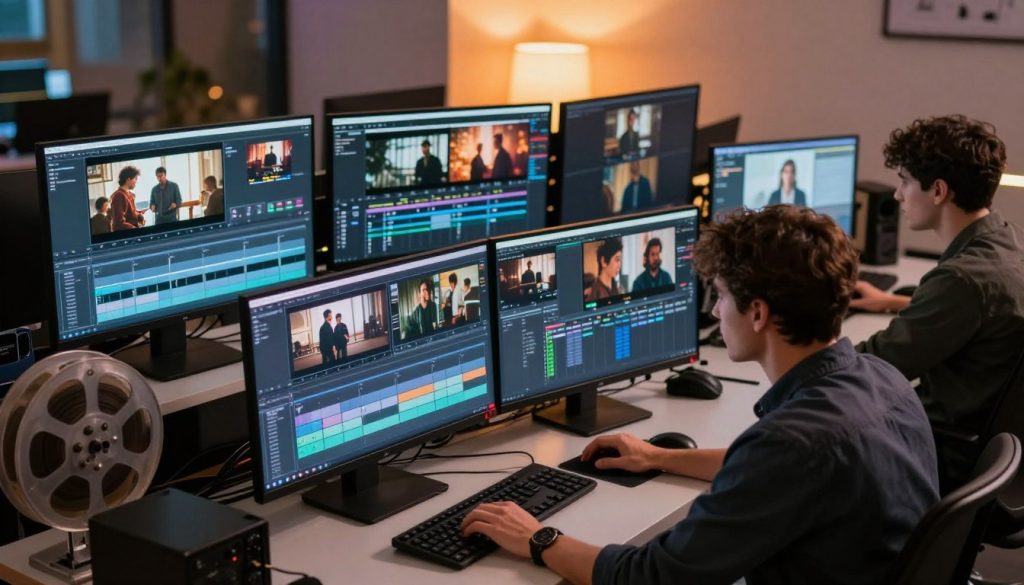
The standard cut is a common tool. It quickly moves the viewer between scenes. It keeps the story moving fast.
For tone shifts, fades or dissolves work well. They signal big emotional or time changes. Subtle transitions help the viewer adjust smoothly.
Pacing and Rhythm in Adult Content Editing
Editing speed is crucial for keeping viewers interested. Too fast, and they feel overwhelmed. Too slow, and it’s boring. You need a rhythm that matches the intensity of the action.
Varying clip lengths prevents editing from feeling forced. Managing the emotional pace makes your content professional. Smooth transitions make your project cohesive and polished.
Integrating Audio and Sound Design
Audio is like the invisible glue that keeps your multi-scene project together. It works even when the visuals change. The soundscape makes the viewer feel something special in each moment. Good scene linking means blending audio smoothly so the transition doesn’t shock you.
Synchronizing Audio with Visual Transitions
Sound bridges are key to keeping things flowing. They start the next scene’s audio a bit before the visuals change. This psychological continuity keeps viewers hooked, even with big visual jumps.
“Sound is fifty percent of the experience, and it is often the most overlooked element in digital storytelling.”
Using audio for scene linking makes the journey smoother for both eyes and ears. Here’s a table to help plan your audio transitions:
| Transition Type | Audio Technique | Viewer Impact |
|---|---|---|
| Hard Cut | Sudden silence or sting | High tension |
| Crossfade | Overlapping ambient noise | Seamless flow |
| Match Cut | Synchronized sound effect | Narrative clarity |
Enhancing Immersion Through Ambient Soundscapes
Ambient soundscapes set the tone and atmosphere of your content. They can be soft and intimate or high-energy. The background noise must stay consistent to keep the viewer in the story.
Adding subtle sounds like room tone or distant city noise makes your AI characters feel real. By managing these layers well, your scene linking stays seamless. Always use high-quality audio to keep your production professional.
Troubleshooting Common AI Generation Inconsistencies
Even the best AI projects can hit unexpected visual roadblocks. Your initial prompts might be spot on, but the software sometimes creates artifacts. These can mess up your story’s flow. Learning to link scenes well is key to avoiding these issues.
Fixing Glitches and Artifacts Between Scenes
When you see flickering or weird visual noise, start by finding the bad frames. Use in-painting tools to fix just those areas. This way, you save time and keep the rest of the footage intact.
Don’t overdo transitions in your edit. Too many complex effects can make your project feel repetitive. Stick to clean cuts to keep your work looking smooth.
Correcting Character Drift During Long Sequences
Character drift happens when AI loses track of facial features or body shape over time. To avoid this, use the same seed values and high-quality images throughout. Keeping your character’s look consistent is crucial for scene linking.
If your character starts to change, try using a stronger weight on your character LoRA. Consistency is key to a professional production. Fixing these issues early will make your final product much better. This ensures your audience stays engaged in your story.
Refining the Final Cut for Professional Quality
The final cut is where your creative vision shines. Even with perfect scene linking, small changes in lighting or color can affect the audience. Polishing these details makes your project stand out as a professional-grade production.
Color Grading for Unified Visual Tone
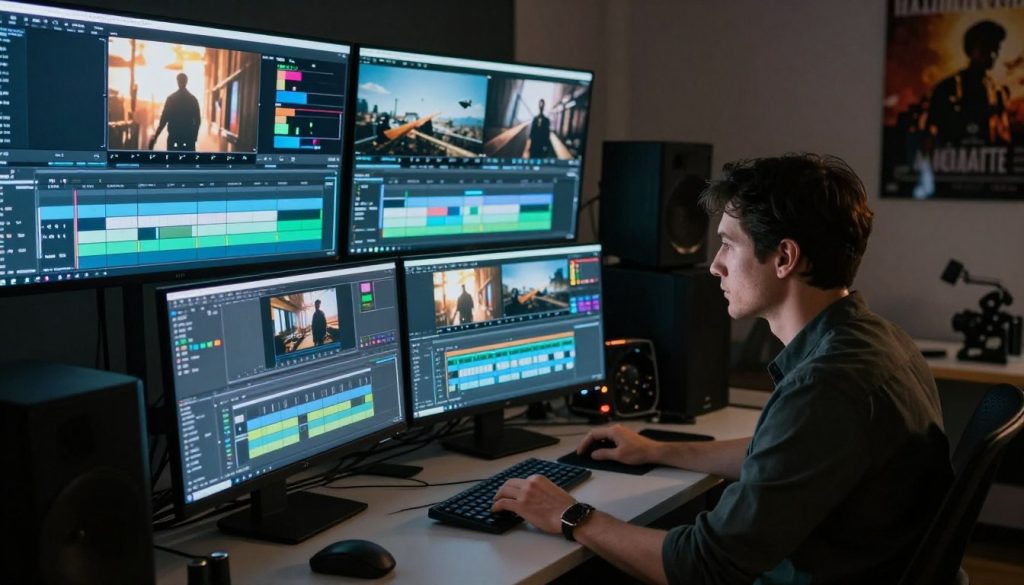
Color grading is key to tying your AI-generated clips together. Using a consistent color LUT or manual adjustments, you can fix differences in skin tones and backgrounds. This keeps your visual narrative consistent, even across different scenes.
Work on balancing shadows and highlights to keep a uniform look. If scenes look different in color, use secondary color correction to adjust. This helps blend your AI assets seamlessly.
Final Review and Export Best Practices
Before finalizing, review each frame for artifacts or continuity errors. Look for flickering, character drift, or sudden environment changes. A detailed review helps catch technical issues.
When exporting, choose settings that balance file size and quality. High-bitrate H.264 or HEVC formats are good for most platforms. Make sure your resolution and frame rate match your project settings to avoid compression problems.
| Platform | Recommended Codec | Target Bitrate | Resolution |
|---|---|---|---|
| Web Streaming | H.264 | 10-15 Mbps | 1080p |
| High-End Archive | ProRes 422 | 100+ Mbps | 4K |
| Mobile Devices | HEVC (H.265) | 5-8 Mbps | 1080p |
Conclusion
Making professional AI videos is a mix of tech skills and creative ideas. You now know how to start big projects with tools like Stable Diffusion and ControlNet. These tools help you create stories that grab your viewers from the first moment.
Doing well in this area means keeping your visuals consistent and telling new stories. Every picture you make is part of a bigger story. Spend time improving your process and trying new editing tricks to make your videos stand out.
Your path to making great videos is always evolving. Keep learning about new AI tools and updates. Use these tips to make your next video even better by focusing on lighting, sound, and how fast things move.
Share your work with others to get fresh views on your projects. Talking with other creators keeps you in the loop with AI video trends. Keep honing your skills and enjoy the freedom that today’s tech offers for your digital projects.
FAQ
Why is narrative flow so critical in a multi scene ai porn production?
Narrative flow is like the glue that holds your scenes together. Without it, your project feels like a bunch of random clips. This can make viewers lose interest.
By focusing on a strong narrative flow, your multi scene ai porn project becomes a cohesive, engaging experience. It feels like a real movie, not just a collection of AI images.
How can I achieve better scene linking between disparate AI-generated clips?
To link scenes well, use match cuts to match visuals like body positions and camera angles. Also, add narrative bridges to connect scenes logically.
These techniques help keep the story flowing smoothly. They ensure your audience stays engaged as the story unfolds.
Which tools are best for maintaining character consistency across different scenes?
For visual uniformity, use Stable Diffusion tools like LoRA and ControlNet. They help keep facial features and body types consistent.
This is crucial when moving through different environments and lighting setups in your multi scene ai porn project.
How do I manage lighting and environment parameters when using different prompts?
Use advanced prompt engineering to keep things consistent. Include specific lighting details like “cinematic rim lighting” in your prompts.
Tools like Runway Gen-2 or Pika Labs handle these details well. They help avoid sudden changes in visuals between scenes.
What are the best editing strategies for transitions in adult content?
Editing is key in software like Adobe Premiere Pro or DaVinci Resolve. Focus on pacing and rhythm to keep the video engaging.
Use cuts, fades, and dissolves to control the emotional flow. Aim for seamless transitions that keep viewers fully immersed.
How does sound design contribute to the immersion of AI-generated videos?
Sound design is crucial for psychological continuity. Use sound bridges to smooth over visual gaps.
Adding ambient soundscapes and quality foley makes AI visuals feel more real. This enhances the overall multi scene ai porn experience.
How do I fix glitches and artifacts that appear during scene transitions?
Fixing AI issues often involves masking and rotoscoping in post-production. Use After Effects to cover up errors or fill in missing parts.
This ensures your project looks professional and corrects any character drift during long sequences.
What is the final step to ensure my multi-scene project looks professional?
The last step is color grading to achieve a unified visual tone. Apply a consistent color LUT in DaVinci Resolve to all your scene linking points.
This masks minor AI variations and gives your multi scene ai porn a polished look before exporting.