Free is a word that gets thrown around a lot, and it usually means something smaller than it sounds. A free trial that lasts one generation. A free tier that only makes thumbnails. A free plan that watermarks everything so badly you cannot use it. So when a video generator says free, the first question is not “is it free?” It is “free of what, and for how long?”
This guide is about what the free tier here actually lets you make: what you can do without a credit card, what to make first so the free tier teaches you something, and what it costs when you outgrow it. It is written for fictional adult content only. The consent rule is absolute: generate videos of yourself, or of fictional adults, and never of a real person without their consent.
Quick verdict
The free tier is real: a 100% free tier with no credit card required, and a Try For Free button on the front page. Start with one short clip from one still image, learn what moves and what does not, and pay only when you know what you want the video to do.
In this guide
- 1. What “free” actually means here
- 2. What to make first: one still image, one movement
- 3. What moves, and what does not
- 4. Make the free clip count: five rules
- 5. When the clip fails: stutters, blur, and wrong motion
- 6. From clip to scene: the next step up
- 7. Export: keep the clip you made
- 8. Five mistakes that waste the free tier
- 9. Cost: what video costs when you outgrow free
- 10. Consent: the rule that decides everything
- FAQ
1. What “free” actually means here
Free here means a 100% free tier with no credit card required. The front page says it plainly: “No limits, no credit card. Create custom NSFW videos instantly using advanced AI.” There is a Try For Free button, and the free tier lets you script, cast, and generate high-definition adult videos and animations without a credit card.
What free does not mean is no account at all. You sign in with Google to start generating. That is the whole gate: a Google sign-in, no card, no payment. Saying that plainly matters, because the honest version of free is more useful than the inflated one. A free tier with a Google sign-in and no credit card is a real offer. A free tier that pretends there is no sign-in at all is a lie, and lies are what make people stop trusting the word free.
And free does not mean unlimited everything forever. It means you can try the tool, make videos, and learn what it does — before you spend anything. The free tier is a test drive, not a lifetime supply. Use it like one: try the tool, learn its limits, and decide with evidence instead of with a sales page.
2. What to make first: one still image, one movement
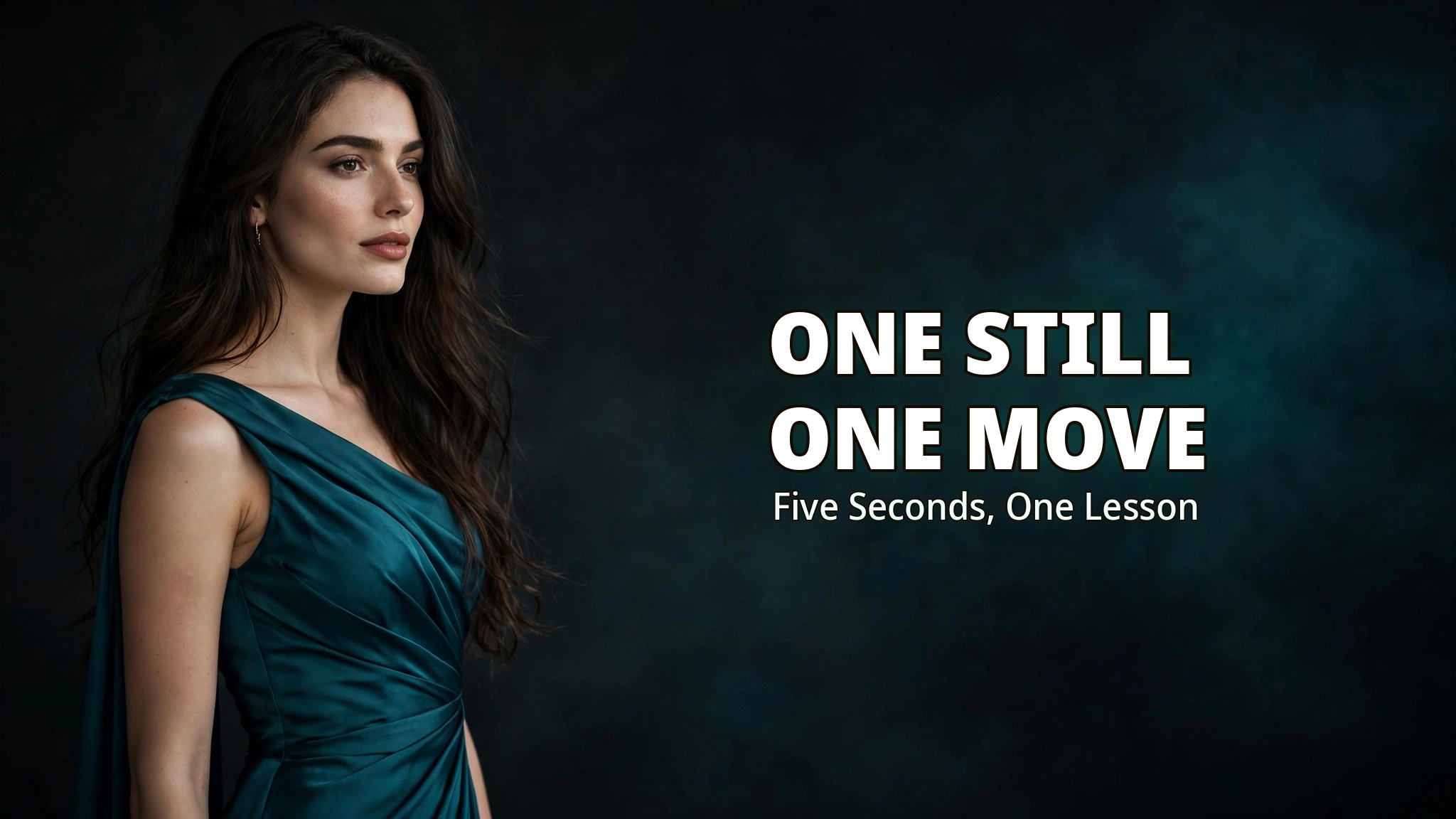
Make one still image move. That is the first video, and it is the whole craft in miniature: a single image, one movement, five seconds. A woman turning her head. A hand reaching out. A dress moving in the wind. One movement, and the video is alive. Ten movements, and the video is a mess — the model cannot keep ten things moving at once, and the result is a stutter.
Start from a still image you already like. The image-to-video path is the cheapest way to learn video, because the image is already right: the face, the light, the scene, all decided. The video only has to add one thing — motion — and one thing is a question the model can answer. A text-to-video prompt has to invent the face, the light, the scene, and the motion all at once, and four things at once is a question the model answers badly.

Keep it short. Five seconds is enough to learn whether the motion works, and five seconds is cheap. A long video is not a better test; it is a longer wait for the same lesson, and the lesson is usually the same: the motion worked, or it did not, and the fix is one change, not a longer clip.
3. What moves, and what does not
Some things move well. A head turning. A hand moving. Hair in the wind. A dress swaying. A slow walk toward the camera. These are simple motions, and simple motions are what the model does best, because they are one thing moving in one direction, and the rest of the frame stays still.
Some things do not move well. A face changing expression mid-sentence. Two people touching and moving at the same time. A hand interacting with a body. A camera that pans and zooms at once. These are hard motions, and hard motions are where the model fails — the face warps, the hand melts, the body forgets where it was. The failure is not your fault. It is the model’s limit, and the limit is the same for everyone.
The rule is to pick the motion the model can do, not the motion you wish it could do. A video that does one simple motion well is a good video. A video that tries a hard motion and fails is a bad video, and no amount of prompting fixes a limit. Work with the model, not against it, and the free tier teaches you the limit for free.
4. Make the free clip count: five rules
- One movement. A head turn, a hand, hair in the wind. One thing moving, the rest still.
- Five seconds. Long enough to see the motion, short enough to iterate. A long clip is a long wait for the same lesson.
- A good still first. The video inherits the image: the face, the light, the scene. A bad still makes a bad video, and motion cannot fix it.
- Front-facing, well lit. The model reads a front-facing, well-lit image better than a dark or side-on one. The still is the input, and the input decides the output.
- One change at a time. Change the motion, or change the still, or change the length — not all three. One change, one lesson.
Five rules, and the free tier becomes a school. Each clip teaches one thing, and the clips add up: after five clips, you know what moves, what does not, and what your next video should be. That is what the free tier is for. It is not a supply of free videos. It is a way to learn before you pay.
5. When the clip fails: stutters, blur, and wrong motion
When a clip fails, it fails in one of three ways: it stutters, it blurs, or it moves the wrong thing. A stutter is the model restarting the motion mid-clip — the head turns, stops, turns again. A blur is the model losing the face or the hand in motion. Wrong motion is the model moving the background instead of the person, or moving the person in a direction you did not ask for.
Each failure has one fix. A stutter means the motion was too complex: simplify it to one movement. A blur means the still was too dark or too small: use a brighter, sharper still. Wrong motion means the prompt asked for two things: ask for one. Our troubleshooting guide on this site covers stutters, blur, and prompt misfires in detail — use it after this one, once you know which failure your clips keep hitting.
And do not re-run the same failed clip hoping it works this time. A failed clip is a lesson, not a lottery ticket. Change one thing — the motion, the still, or the length — and run it again. The same input gives the same failure, and the same failure twice is a waste of the free tier.
6. From clip to scene: the next step up
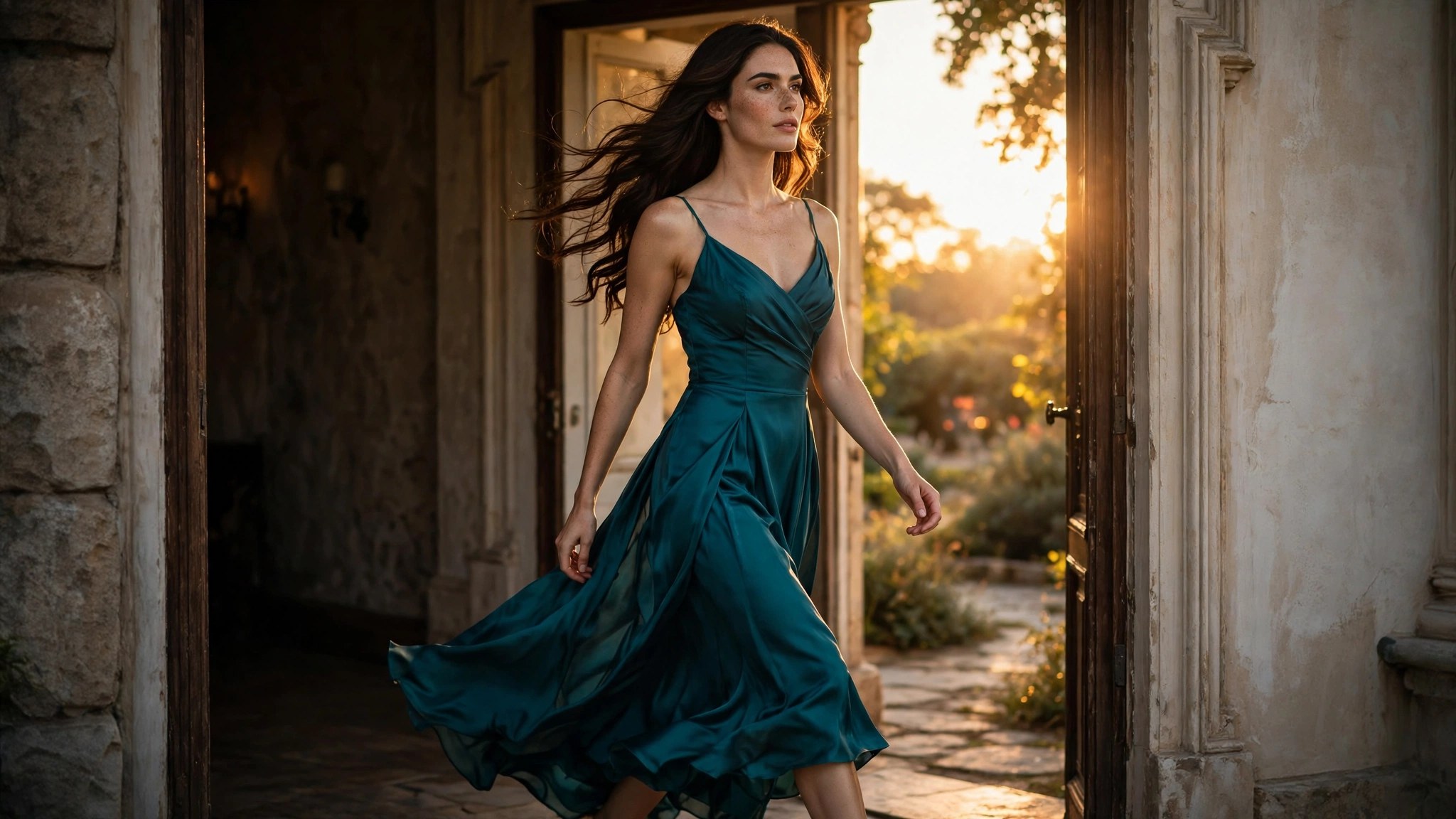
A clip is one movement. A scene is a clip with a purpose: a beginning, a middle, and an end, even in five seconds. A woman looks at the camera, then looks away. A hand reaches out, then pulls back. A door opens, and someone steps through. The scene is not longer. It is the same length, with a shape.
The shape is what makes a scene feel like a video instead of a moving picture. A moving picture shows motion. A scene shows a moment — and a moment has a before and an after, even when it lasts five seconds. Give the clip a shape, and the viewer watches it twice. Give it no shape, and the viewer watches it once, and forgets it.
Our multi-scene guide on this site covers seamless transitions and narrative flow in detail — use it after this one, once your single clips are working. A scene is the step after a clip, and a multi-scene production is the step after a scene. Do not skip the step. A scene built on a clip that does not work is a scene that does not work, and the free tier is the cheapest place to learn that.
7. Export: keep the clip you made
Export the clip you made. A video that stays on the platform is a video you cannot use, and a video you cannot use is a video you did not make. Export it as MP4 for sharing, or as a GIF or a looping clip for a feed, and pick the aspect ratio for where it will live: wide for a player, tall for a phone, square for a feed.
Our export guide on this site covers MP4, GIF, looping clips, and aspect ratios in detail — use it after this one, once you have a clip worth keeping. The export is the part of the craft nobody writes about, and it is the part that decides whether the video exists outside the generator. A clip that is never exported is a clip that never happened.
And keep the still that made it. The still is the recipe: the face, the light, the scene, the motion. Save the still with the clip, and the next time you want the same kind of video, you start from the still instead of from a blank box. A saved still is a saved scene, and a saved scene is the cheapest way to make the next video.
8. Five mistakes that waste the free tier
- Ten movements at once. The model cannot keep ten things moving. Fix: one movement, the rest still.
- A long first clip. A long wait for the same lesson. Fix: five seconds, then iterate.
- A bad still. Motion cannot fix a bad image. Fix: a good, front-facing, well-lit still first.
- Re-running the same failure. The same input gives the same failure. Fix: change one thing, then run again.
- Never exporting. A clip that stays on the platform never happened. Fix: export as MP4, GIF, or a looping clip.
Fix one mistake at a time. Change the motion, or change the still, or change the length — not all three. One change, one lesson. The free tier is a school, and the school is free, but only if you learn from it.
9. Cost: what video costs when you outgrow free
When you outgrow the free tier, video costs credits, and the price is shown before you run it. A video template costs 351 credits for a 5-second 720p clip — roughly $7.02 on the $19.99 pack and $4.21 on the $59.99 pack — and 561 credits for an 8-second clip, roughly $11.22 on the $19.99 pack and $6.73 on the $59.99 pack. An image costs about 49 credits, roughly $0.98 on the $19.99 pack and $0.59 on the $59.99 pack, so a still plus a 5-second clip is about 400 credits, roughly $8.00 on the $19.99 pack and $4.80 on the $59.99 pack.
That is why the free tier matters: a clip that fails costs you nothing while you are learning, and a clip that works costs you credits only when you know what you want. Learn on free. Pay for the clip you already know works. The generator shows the exact cost before you run it, so the price is never a surprise — and a surprise is the only thing a price should never be.
10. Consent: the rule that decides everything
Only generate videos of yourself, or of fictional adults. Never generate a video of a real person without their consent — not a celebrity, not an acquaintance, not a stranger. Non-consensual generation is not allowed, and a generated video is harder to take back than a photo once shared. The tool is built for your own videos and fictional adults, and that boundary is absolute.
This is also practical, not just ethical: videos made with consent are usually better inputs and better results. They are shot properly, well lit, front-facing — because the person knew they were being filmed. A stolen or secret clip is usually dark, cropped, or shot from a bad angle, which is also a bad input. Consent and quality point the same way — and a free clip, built from a clear still and one simple movement, is the proof: it works because you asked for it clearly, not because you took it from someone.
FAQ
Is the video generator really free?
Yes — there is a 100% free tier with no credit card required, and a Try For Free button on the front page. You sign in with Google to start generating.
What should I make first?
One still image, one movement, five seconds. A head turn, a hand, hair in the wind. One thing moving, the rest still.
Why does my clip stutter or blur?
A stutter means the motion was too complex — simplify it to one movement. A blur means the still was too dark or too small — use a brighter, sharper still.
How much does a video cost when I pay?
A video template costs 351 credits for a 5-second 720p clip — roughly $7.02 on the $19.99 pack and $4.21 on the $59.99 pack — and 561 credits for an 8-second clip. The generator shows the exact cost before you run it.
How do I keep the clip I made?
Export it as MP4 for sharing, or as a GIF or a looping clip for a feed, and pick the aspect ratio for where it will live.
Can I make a video of a real person?
Only with their consent: use videos of yourself, or of fictional adults. Generating a video of a real person without consent is not allowed.
Final verdict
The free tier is real: a 100% free tier with no credit card required, and a Try For Free button on the front page. Start with one still image, one movement, five seconds — learn what moves and what does not, fix one failure at a time, export the clip you made, and pay only when you know what you want the video to do. Free is not a supply of videos. It is a way to learn before you pay, and learning is the only thing free should ever be used for.