Ever wondered why some scenes draw you in while others seem far away? It’s often the choice of camera angles that makes the difference. Learning professional cinematography can greatly improve your work and engage your audience.
Knowing how camera movements affect our view can turn ordinary footage into something powerful. Whether using old-school setups or ai porn video camera angles, the right shot can change everything. This guide will teach you the key terms and skills to create a top-notch shot list for your next project.
Consistency and creativity are key to great content. By mastering camera control, you can set the mood of your work. Let’s dive into how these basic moves can make your content shine in a crowded field.
Key Takeaways
- Learn how different movements shape the emotional response of your viewers.
- Discover the technical vocabulary required to build a professional shot list.
- Understand the impact of perspective on overall production quality.
- Master foundational techniques to make your content stand out from the crowd.
- Gain the confidence to choose the right framing for any creative project.
Foundations of Cinematic AI Video Production
Creating a cinematic video is more than just using smart prompts. It’s about understanding visual grammar. Think of your AI tools as a digital camera crew. Every choice you make affects the story’s impact.
Learning these basics helps your creative vision shine through in top-notch motion media.
“Composition is the language of the eyes, guiding the viewer through the story without a single word of dialogue.”
Understanding the Role of Composition in AI Generation
Shot size is key to your visual grammar. It controls how much info the audience gets and where they look in a cinematic video scene. Picking the right frame size sets the mood and scale of your scene.
The table below shows how different shot sizes affect the viewer’s experience:
| Shot Type | Primary Purpose | Emotional Impact |
|---|---|---|
| Extreme Long Shot | Establishing environment | Isolation or grandeur |
| Medium Shot | Natural interaction | Neutrality and balance |
| Close-Up | Emotional intensity | Intimacy and focus |
Setting Up Your AI Video Workflow for Success
A well-organized workflow keeps your cinematic video consistent. Define your visual style and camera settings before starting. This avoids the problem of clips that don’t fit together.
Begin with a storyboard or a list of shots you need. Organizing prompts by camera angle and movement helps control the final look. This methodical approach lets you refine scenes without losing your cinematic video style.
Consistency is key to professional work. Standardize aspect ratios and lighting early. This makes every clip feel part of a cohesive cinematic video experience.
Mastering POV Camera Angles for Immersive Content
Mastering the point-of-view shot puts your audience right in the scene. It simulates the character’s vision, creating a visceral connection unmatched by standard shots. This technique needs precise camera movement to keep the illusion alive.
Defining the First-Person Perspective in AI
A point-of-view shot is like a window into the character’s world. It shows the viewer what the subject sees, removing barriers between observer and action. Using this perspective, you guide the viewer’s eyes through your digital world.
This method is crucial for building tension and intimacy. Since the viewer is in the character’s space, every camera movement feels personal. Keeping the framing consistent helps the audience stay connected to the story.
Prompt Engineering for POV Stability
Stability is key for a professional-looking POV sequence. AI models often struggle with shaky motion, breaking immersion. To fix this, include keywords in your prompts for smooth, fluid tracking.
Use terms like “stabilized handheld,” “smooth tracking shot,” or “steady gaze” to guide the AI. By refining your camera movement instructions, you avoid erratic shifts. Consistency is key for a high-quality, cinematic feel.
Avoiding Common Distortion Issues in Close-Up POV
Close-up shots in first-person perspective can suffer from warping or unnatural depth. When the camera gets too close, AI may struggle with geometry. Adjust your focal length settings to a more natural range to avoid these issues.
Stay away from extreme wide-angle settings, as they can stretch the edges of the frame. Opt for a standard lens simulation for realistic proportions. The following table shows how different settings affect your output:
| Setting Type | Effect on POV | Recommended Use |
|---|---|---|
| Standard Lens | Natural perspective | General character interaction |
| Wide Angle | Increased depth | Environmental exploration |
| Macro Focus | High detail | Close-up object inspection |
| Stabilized Motion | Reduced jitter | High-action sequences |
Implementing Dolly Moves for Dynamic Depth
You can make AI visuals more engaging by using camera movement techniques. Moving the lens towards or away from your subject adds depth. This makes the viewer feel like they’re part of the story. It’s key for a professional look in digital projects.
Simulating the Dolly Zoom Effect
The dolly zoom creates a sense of vertigo or unease. It’s famous from Alfred Hitchcock’s Vertigo. In AI, you can achieve this by mixing prompts for movement and lens changes.
“The camera is the eye of the storyteller, and movement is the heartbeat of the scene.”
Creating Smooth Forward and Backward Motion
Smooth camera movement needs careful planning in your prompts. Define the speed and length of the move to avoid awkwardness. When moving forward, make sure the background moves smoothly too.
The table below shows how different movements affect your scene:
| Movement Type | Visual Impact | Best Use Case |
|---|---|---|
| Dolly In | Increases intimacy | Character focus |
| Dolly Out | Reveals context | Setting the scene |
| Dolly Zoom | Creates tension | Dramatic reveals |
Adjusting Focal Lengths During Dolly Sequences
Changing focal lengths is crucial for camera movement. Adjusting the lens as you move keeps the subject size right while changing the background. This dynamic adjustment stops the image from looking distorted. Try different focal values to see their effect on depth.
Utilizing Static Camera Angles for Narrative Focus
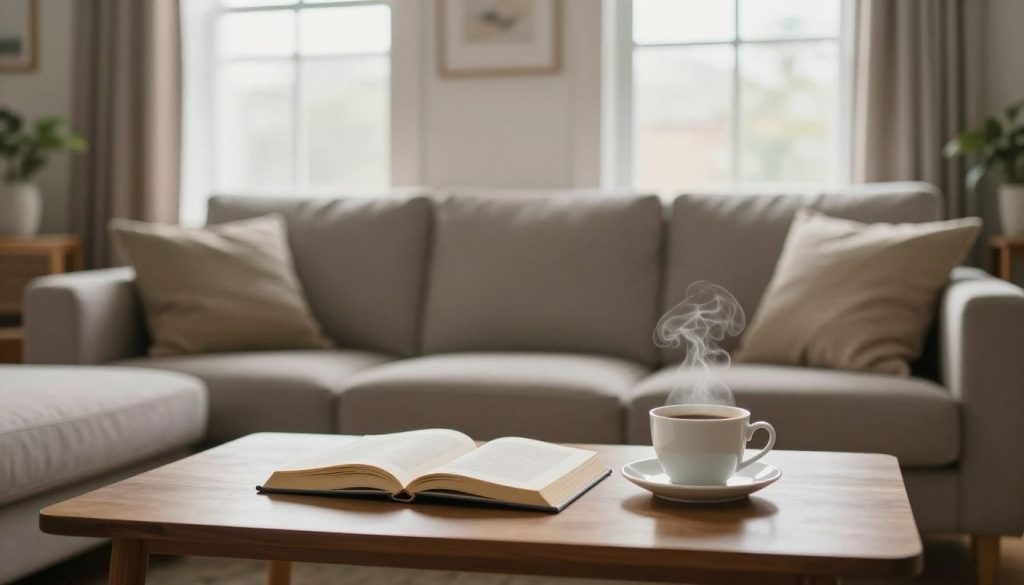
Sometimes, the most powerful way to tell a story is to let the camera stand perfectly still. While dynamic motion often grabs attention, a static shot provides the essential foundation for clear visual storytelling. By removing unnecessary camera movement, you allow the audience to fully absorb the details of the environment and the emotions of the characters.
When to Choose a Fixed Tripod Perspective
A fixed tripod perspective is ideal when you want the viewer to feel like a silent observer of the action. This approach is particularly effective for establishing the geography of a scene, ensuring that the audience understands exactly where characters are located. Even when the camera is locked, you can still incorporate a subtle pan or tilt to observe the space from a single vantage point.
Choosing this style helps you avoid the disorientation that can sometimes occur with excessive motion. It is a strategic choice that prioritizes the narrative over visual flair. When your goal is to highlight a specific dialogue or a subtle performance, a stable frame is often your best tool.
Maintaining Consistency in Static AI Scenes
Consistency is the hallmark of professional video production. When you rely on static shots, you must ensure that the lighting, character appearance, and background elements remain stable across multiple clips. Any unexpected shift in perspective can break the immersion for your viewer.
To achieve this, focus on keeping your prompts uniform throughout the generation process. If you decide to introduce a slight camera movement like a slow pan, ensure that the speed and direction remain identical in every cut. This attention to detail creates a seamless experience that elevates the quality of your final edit.
Advanced Drone Moves and Aerial Perspectives
Adding drone-style shots to your AI videos brings a grand, cinematic scale that grabs viewers right away. These elevated views change how your digital scenes look, giving a sense of scope that regular angles can’t. Learning this camera movement is key for creators wanting to improve their work.
Simulating High-Angle Drone Sweeps
Aerial shots offer a unique view, showing a location’s topography. When you tell your AI to create these shots, describe the sweeping motion over a landscape. This camera movement sets the scene and helps viewers understand where they are.
Creating Cinematic Panning and Tilting Effects
To look professional, smooth panning and tilting are essential. These movements guide the viewer’s eye, making the scene feel dynamic and purposeful. Keeping the camera movement steady ensures a smooth transition between shots.
When fine-tuning your prompts, control the tilt’s speed and direction. A slow tilt can add majesty to your aerial footage. Always aim for stability in your camera movement to avoid jarring effects that might disrupt the viewing experience.
Managing Scale and Perspective in Aerial Shots
It’s important to manage scale in these shots to show the subject’s size in relation to its surroundings. By placing a familiar object or person in a vast scene, you create a strong sense of proportion. This camera movement highlights your subject’s isolation or grandeur.
Think about how the perspective changes as the camera moves through 3D space. Proper scaling makes your aerial shots feel real, even if they’re AI-generated. By balancing these elements, you can create standout content for any professional project.
Optimizing AI Porn Video Camera Angles for Realism
Realism in AI-generated adult content depends on choosing the right camera angles and movements. You need to find a way to match your creative ideas with the software’s limits. Learning about ai porn video camera angles is key to making content that feels real and engaging.
Balancing Artistic Vision with Technical Constraints
Every tool has its own limits when it comes to understanding space. You might dream of a wide shot, but the AI might find it hard to keep characters steady. It’s important to focus on keeping the camera steady rather than trying too much to ensure quality.
Begin by testing simple movements in your software. This helps you understand its limits. By knowing these limits, you can adjust your plans and improve your work. This way, you can create professional scenes without losing the story’s essence.
Refining Camera Movement Prompts for Better Flow
The key to smooth motion is in precise prompts. Give the AI clear instructions on speed, direction, and depth. Using consistent prompts helps the AI know exactly how to move the camera.
When working on camera angles nsfw, think about how small changes can affect a scene’s feel. Use specific terms like “slow pan” or “steady zoom” to guide the AI. This helps it create smooth, deliberate movements.
Integrating Multiple Angles for a Professional Edit
Using just one angle can get boring, which is why editors mix it up. By using different ai porn video camera angles, you keep the viewer interested. Think of your project as a series of visual moments that tell a story.
Plan to switch between wide shots for context and close-ups for emotion. This approach creates a professional feel, like traditional movies. Make sure your transitions make sense to keep the viewer hooked from start to finish.
Technical Settings for Cinematic Video Quality
Improving your technical settings is key to making your content look professional. By adjusting the basics of your project, your cinematic video will shine. This ensures your video looks great on any screen.
Adjusting Aspect Ratios for Different Platforms
Picking the right aspect ratio is crucial for how people see your work. Desktops usually use widescreen, but mobiles need vertical formats.
- 16:9 (Widescreen): Best for YouTube and TV for a classic movie feel.
- 9:16 (Vertical): Key for TikTok and Instagram Reels to use more screen space.
- 4:5 (Portrait): A good middle ground for social media, offering more vertical space.
Check your platform’s aspect ratio needs before starting. Wrong ratios can cause cropping or black bars, ruining the cinematic video feel.
Managing Frame Rates and Motion Blur
Frame rates affect how smooth your video looks. A 24 fps frame rate is best for a movie-like feel. But, 60 fps can make things look too smooth for storytelling.
Depth of field is also important. It controls how sharp objects are in your image. This helps focus the viewer’s attention on certain parts of the scene.
Lastly, motion blur is key to avoiding a shaky look. If your clips seem too sharp, add a bit of blur in editing. This makes your video feel more like a high-end cinematic video.
Lighting Techniques to Complement Your Camera Moves
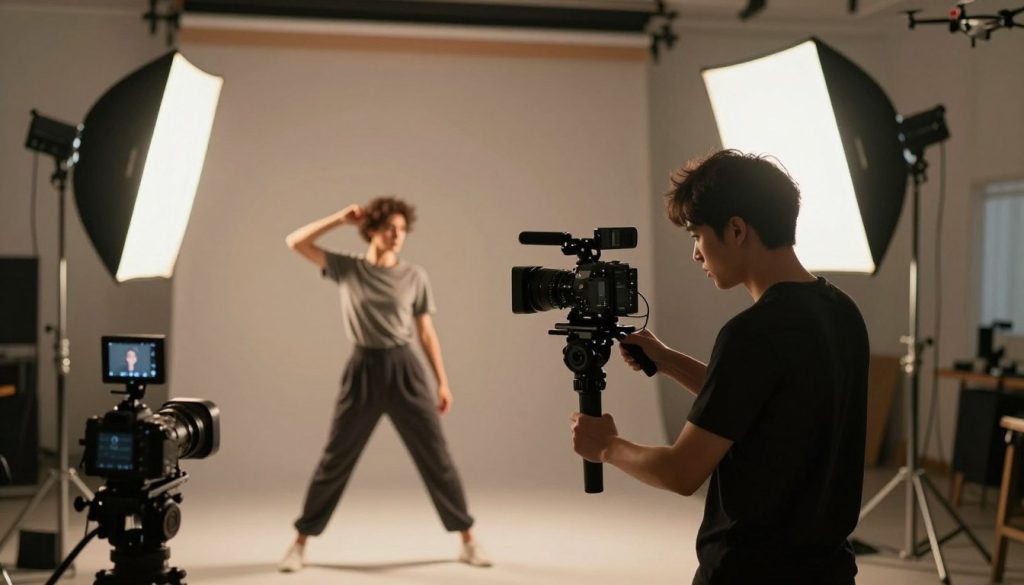
Lighting is key to adding depth to your shots. It guides the viewer’s eye through your frames. When you match your light sources with your camera angles, you create a more realistic feel.
Matching Light Sources to Camera Positioning
For a professional look, keep your lighting consistent. If your camera angles change, your light source should stay the same. For example, use side light for side-angle shots.
Don’t let your light sources move without the camera. This can make the scene feel off. Make sure your lighting matches the camera’s direction.
Using Shadows to Enhance Depth and Perspective
Shadows are more than just dark areas. They help create a three-dimensional feel. By placing shadows wisely, you can highlight your subjects and show distances.
Good shadow use is crucial for wide shots. It adds contrast and prevents images from looking flat. Here’s a table to help you light up your shots based on your camera moves.
| Camera Movement | Primary Lighting Goal | Shadow Placement |
|---|---|---|
| Static Tripod | Balanced Exposure | Soft, subtle fill |
| Dolly Forward | Focus on Subject | Defined rim lighting |
| Drone Sweep | Global Depth | Long, natural shadows |
| POV Motion | Immersive Realism | Dynamic, shifting highlights |
Post-Production Editing for Seamless Transitions
Your journey to a cinematic video ends in post-production editing. Here, all your camera angles come together. This makes a story that keeps the viewer hooked.
Cutting Between Different Camera Angles
One take can have many movements and angles. To keep things smooth, cut at natural moments. Match the action or subject’s gaze in each shot.
When switching from wide to close-up, match the scene’s mood. A good cut can make your cinematic video more powerful. Always focus on the story’s flow, not just the shots.
Applying Motion Smoothing to AI-Generated Clips
AI footage can have unnatural movements. Motion smoothing tools fix this, making it smoother. This is key for a polished look like traditional films.
Try different stabilization levels to get it right. Too much smoothing can look fake. Aim for a natural feel that’s professional.
| Editing Technique | Primary Benefit | Best Use Case |
|---|---|---|
| Match-on-Action | Maintains continuity | Fast-paced sequences |
| Motion Smoothing | Reduces jitter | AI-generated movement |
| Jump Cuts | Adds urgency | Stylized transitions |
| Cross-Dissolve | Softens shifts | Time-lapse or mood changes |
Common Mistakes to Avoid in Camera Movement
Getting smooth motion right can make your video look professional. It keeps your audience engaged with the story, not distracted by technical issues. When you master camera movement, your viewers stay focused.
Preventing Unnatural Camera Jitter
AI models sometimes struggle with smooth motion, causing unnatural jitter. This can make your scene feel off. Random motion can be good for disorientation, but it can also make viewers feel sick if it’s not meant to.
To avoid this, keep your motion simple and avoid wild changes. Consistency is key for stable and professional camera movement.
Correcting Perspective Shifts in Long Sequences
Perspective shifts happen when AI models lose spatial orientation in long scenes. If the camera angle changes suddenly, viewers can get lost.
To fix this, break long scenes into shorter parts. By re-establishing the focal point in each segment, you control the camera better. This keeps the viewer oriented and ensures a cohesive final product.
Ethical Considerations and Content Standards
Working with AI-generated content means balancing creativity with responsibility. When you pick camera angles nsfw, you show your professional values and goals. Always keep integrity in mind, from starting to finish.
Maintaining Professionalism in Adult Content Creation
Being professional means handling sensitive topics with care. Your content should be respectful and of high quality. Avoid anything that’s too much or harmful.
Being consistent is crucial for building a brand. Think about how camera angles nsfw fit into your story. A thoughtful approach makes your work stand out, not just its content.
Adhering to Platform Guidelines and Safety
Every platform has rules you must follow to keep your account safe. Breaking these rules can get you banned and lose your audience. Always check the safety standards of where you host your media.
Protecting your online presence is also key. Choose camera angles nsfw that fit community standards to avoid trouble. Keeping up with new rules helps you stay creative without breaking rules.
| Ethical Practice | Risk Factor | Impact on Growth |
|---|---|---|
| Transparent Labeling | Deceptive Content | High Trust |
| Respectful Framing | Exploitative Angles | Brand Stability |
| Platform Compliance | Policy Violations | Account Longevity |
| Quality Focus | Low-Effort Spam | Audience Retention |
Conclusion
Mastering visual storytelling means knowing how your lens affects the viewer. You now have the basics to make simple prompts look amazing. This will make your work stand out.
Practicing different camera angles will make your work unique. Try out new angles to find your style. This will grab people’s attention on platforms like Runway or Pika.
As you get better, your creativity will grow. Keep trying new things with your software. AI cinematography is always changing, so stay curious and keep improving.
Use these camera angles in your next project to see how it changes your story. Share your work to get feedback and inspire others.
FAQ
How can I establish a strong foundation for composition in a cinematic video using AI?
Start by focusing on shot size as your main building block. This guides the audience’s attention. Use tools like Runway Gen-3 Alpha to plan your visual grammar before generating content. This approach leads to more professional and consistent results.
What are the best practices for generating immersive POV shots without distortion?
For camera angles nsfw or high-action POV sequences, focus on stable environments in your prompts. High-fidelity models like Luma Dream Machine prevent warping and perspective shifts. This ensures the viewer feels like they’re right there with the character.
How do I simulate a professional dolly zoom effect in AI-generated scenes?
Prompt the camera to move forward or backward while adjusting the focal length. This technique, used in Hollywood classics, adds depth and sophistication to your videos.
When should I choose a static camera angle over more complex motion?
Use a fixed tripod for scenes where you want to keep the focus or show the scene’s layout. A locked-off shot helps the audience watch without distractions. It’s key for keeping your video consistent during editing in Adobe Premiere Pro.
How can I make aerial drone shots look more realistic in an AI workflow?
To get the grand feel of a DJI Mavic 3 sweep, manage scale and perspective in your prompts. Use high-angle sweeps with smooth panning or tilting. This makes the subject’s relationship to the environment clear, boosting your video’s production value.
What technical settings are essential for professional-grade AI video quality?
Adjust your aspect ratios for the right platform (like 16:9 for YouTube) and manage frame rates carefully. Reducing “AI shimmer” by controlling motion blur makes your clips look real and grounded.
How does lighting impact the effectiveness of my camera movements?
Lighting should match your camera’s path to create depth. Use light sources and shadows to define the scene. This makes your video feel real and immersive.
How do I fix common movement errors like camera jitter in post-production?
If AI struggles with motion, use DaVinci Resolve for smoothing and stabilization. This removes jitters and corrects perspective shifts. It turns raw AI footage into a smooth, professional story.
Why is it important to balance artistic vision with technical constraints in camera angles nsfw?
Balancing artistic vision with technical standards ensures your content is engaging and meets high production values. Refine your prompts for better flow and use multiple angles. This creates captivating content that meets professional standards while following safety guidelines.